Who is Juno?
Juno was one of Rome's greatest goddesses — patron of women, marriage, and childbirth, and a guardian of the Roman state. As Juno Regina (“Queen Juno”) she stood alongside Jupiter and Minerva in the Capitoline Triad, the three deities honored in the great temple on the Capitoline Hill.
Her identity was never single. She was at once a queenly state goddess, the protector of women, the tutelary power of communities, and the literary counterpart of Greek Hera. Understanding Juno means reading those roles together rather than reducing her to a jealous wife of myth.
Origins & history
Juno's plurality shows most clearly in her cult titles, each governing a different sphere. As Juno Lucina she presided over childbirth; as Juno Moneta she was associated with a temple on the Capitoline where Roman coin production became attached to her name — one route by which the Latin moneta ultimately contributed to the English word “money.” Philosophical writers could allegorize her as an aspect of air or cosmic order, but for ordinary Romans her worship was ritual and civic rather than an exercise in abstraction.
Cult & worship
Juno was worshipped across the whole of Roman life, from the household to the state. As Juno Regina she shared the Capitoline temple with Jupiter and Minerva at the summit of Roman public religion. As Juno Lucina she was invoked in the birthing chamber, the goddess women called on in labor. As Juno Moneta she was tied to the Capitoline mint, her precinct doubling as the place where Rome struck its coin. Under these titles a single goddess served sovereignty, women, and the very money supply of the city.
Greek equivalent
Juno was identified with Greek Hera, and much of her narrative mythology — her marriage to Jupiter, her quarrels and jealousy — is inherited from the Greek tradition through Latin poetry. But the identification is not the whole story. Hera is queen of the Olympians; Juno is that and a working civic goddess of Rome, with cult titles like Lucina and Moneta that have no simple Greek counterpart. Reading the two together is the clearest way to see what was genuinely Roman about her.
Famous myths & stories
Sister and wife of Jupiter
In Ovid's Fasti, Juno asserts her own rank without apology: she is called the sister and wife of Jupiter, and she claims the standing that comes with it. The line captures her self-understanding as queen among the gods, not merely consort.
The divine antagonist
In Virgil's Aeneid, Juno is the formidable power set against the Trojans and against Rome's destiny. Her rage repeatedly causes suffering and delay — yet it cannot overturn fate. That is her great mythic limitation: she can postpone Rome's founding but never defeat it, and her resistance is exactly what gives the founding story its dramatic force.
The jealous queen
Much of Juno's inherited myth turns on jealousy over Jupiter's infidelities. Modern readers rightly notice the recurring ancient trope of a powerful wife defined chiefly by resentment of her husband — a frame that says as much about ancient assumptions as about the goddess herself.
Legacy & influence
Juno endures in the calendar and the culture. The month of June bears her name, long associated with weddings. She remains central in classical art and literature, in the feminist reinterpretation of ancient goddesses, and in the very vocabulary of marriage and queenship. Through Juno Moneta her name even lingers in the words “money” and “mint.”
Symbolism
Juno's meaning is carried less by a single emblem than by her titles. Regina marks sovereignty — the queen who shares the summit of the state cult. Lucina, from light, marks the goddess who brings the newborn into the light of day. Moneta ties her to warning, counsel, and the coinage struck in her precinct. Together the titles say what Rome meant by her: a queenly power presiding over the thresholds of life, marriage, birth, and civic order.
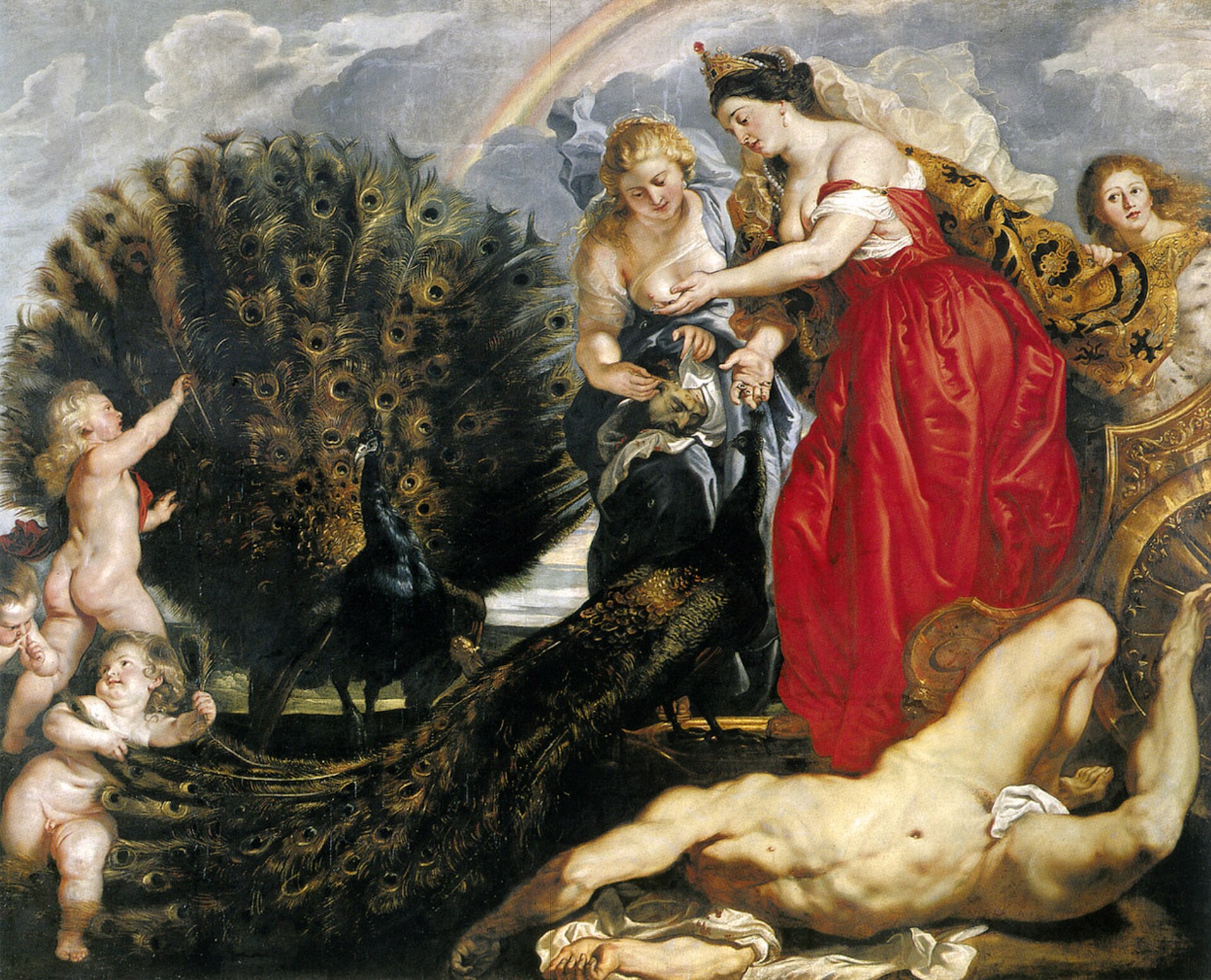
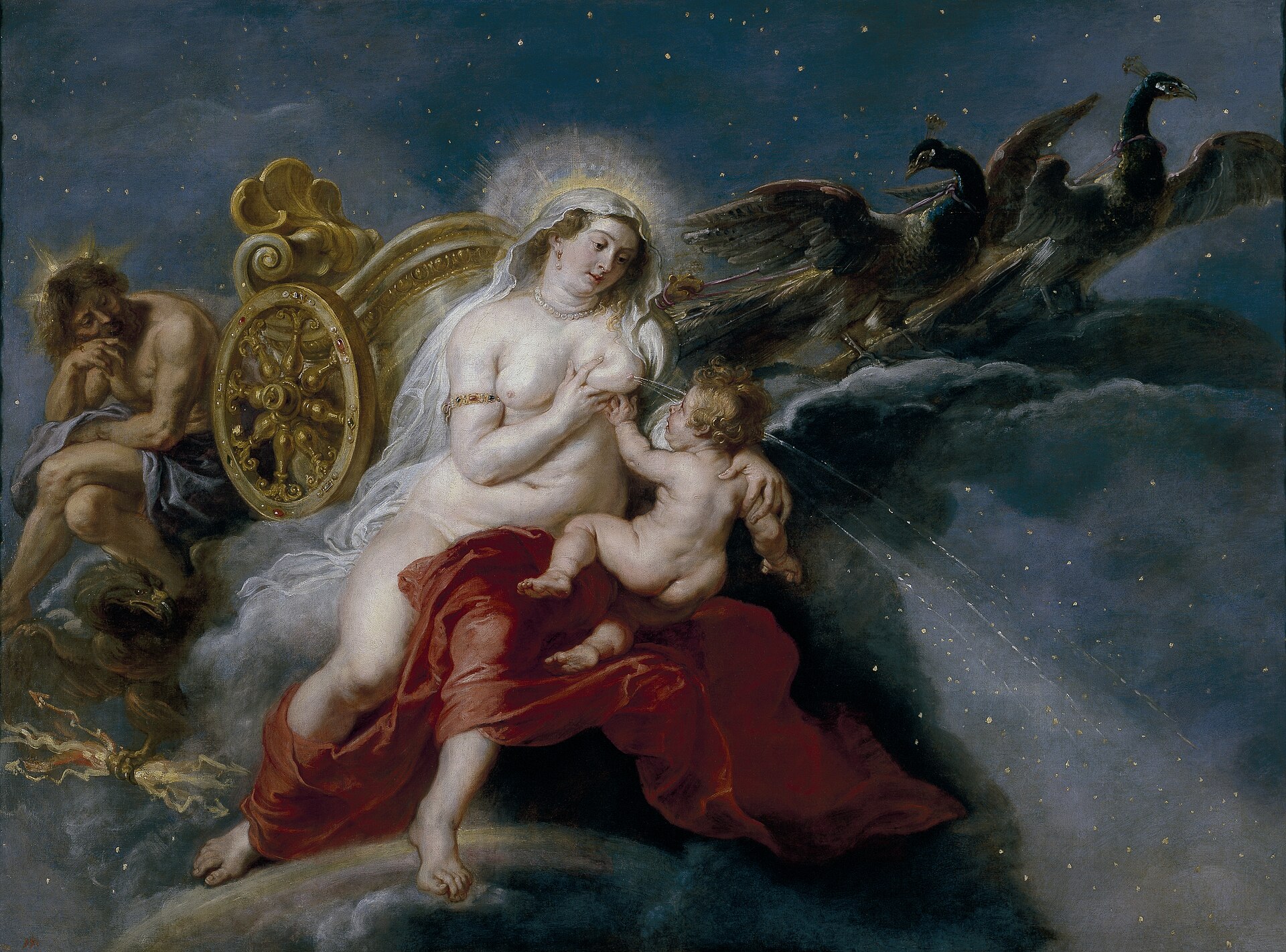
Famous public-domain depictions — click any image to view it full size.
Is Juno the same as Hera?
They were identified with each other, and much of Juno's narrative mythology — her marriage to Jupiter, her jealous rage — is shared with Greek Hera. But Juno was not simply a Latin Hera. As Juno Regina she was part of the Capitoline Triad, and under titles such as Lucina and Moneta she filled civic and cultic roles specific to Rome.
What was Juno the goddess of?
Juno was patron of women, marriage, and childbirth, and a guardian of the Roman state. Her identity was plural: as Juno Regina she was queen of the gods and part of the Capitoline Triad, as Juno Lucina she governed childbirth, and as Juno Moneta she was linked to the mint on the Capitoline.
What does Juno Moneta mean?
Juno Moneta was the goddess as worshipped at her temple on the Capitoline, where Roman coin production became linked to her name. The Latin word moneta is one route by which her cult title ultimately contributed to the English word “money.”
How was Juno worshipped in Rome?
Through state and household cult under many titles. As Juno Regina she shared the great Capitoline temple with Jupiter and Minerva; as Juno Lucina she was invoked in childbirth; and as Juno Moneta she was tied to the mint. Her worship was ritual and civic rather than dependent on philosophical abstraction.
 Michael Paycer