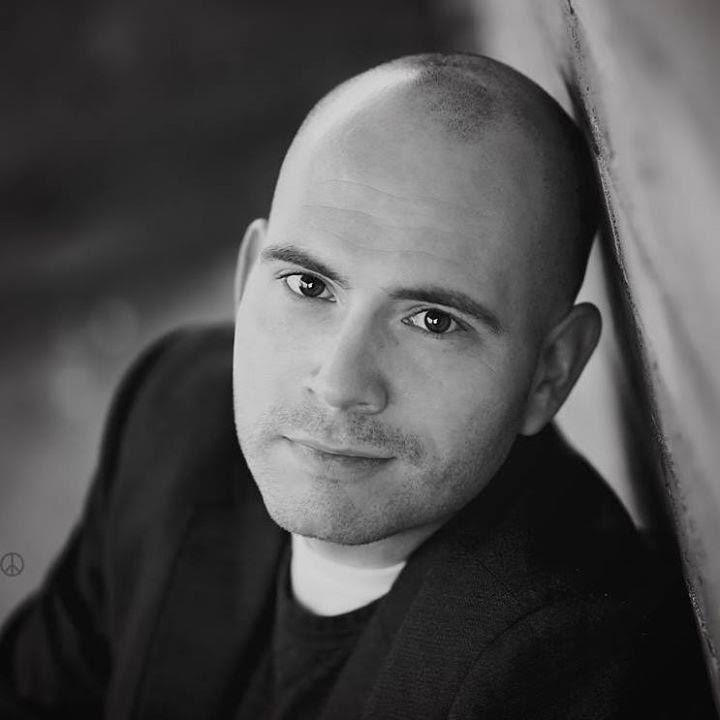
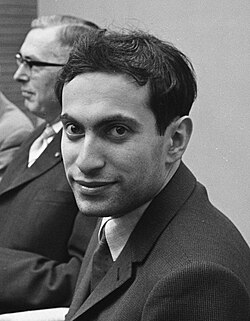
Mikhail Tal
The Magician from Riga — the most feared attacking player who ever lived. World Champion in 1960 at just 23, Mikhail Tal played chess like no one before or since: a torrent of sacrifices, complications, and bluffs that overwhelmed even the world's best defenders. Engines have since refuted some of his combinations. It barely matters. Across the board, against a human clock, Tal was nearly impossible to stop.
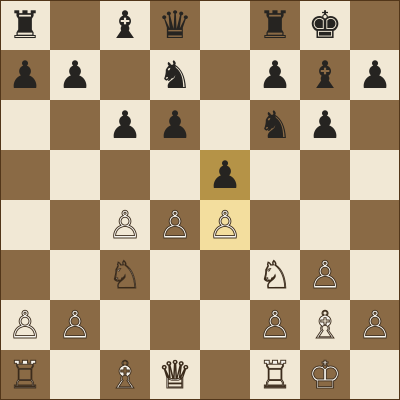
Botvinnik–Tal, World Championship 1960, Game 6 — the King's Indian Defence that produced Tal's immortal knight sacrifice 21...Nf4!! (central tension highlighted). The game helped win him the world title and is one of the most famous attacking games ever played.
Lived
1936–1992 · born Riga, Latvia (then USSR)
World Champion
1960–1961 — youngest champion to that point, defeated Botvinnik at 23
Signature Game
Botvinnik–Tal 1960, Game 6 — the 21...Nf4 knight sacrifice
Style
Sacrificial attack, deliberate complications, psychological pressure
Chess as a hurricane
Tal's chess was the polar opposite of the scientific Soviet school he grew up in. Where his great rival Botvinnik prepared with research-lab rigor, Tal sought chaos — positions so sharp and so tangled that calculation gave out and intuition took over. He would sacrifice a knight, a piece, sometimes more, not because he had calculated a forced win, but because he sensed his opponent could not survive the storm.
"There are two kinds of sacrifices: correct ones, and mine."
The joke contains the whole truth. Tal understood that practical chess is played by humans under time pressure, and that a sufficiently complex position is a weapon in itself. He created problems faster than defenders could solve them. His health was frail his whole life, but at the board the frail man became a predator.
Botvinnik–Tal, 1960
In 1960 Tal challenged the reigning champion Mikhail Botvinnik — the "Patriarch" of Soviet chess, then 48 and twice already champion. Few gave the 23-year-old a real chance against such a preparation machine. Tal won 12.5–8.5, attacking from the first move to the last, and became the youngest world champion in history to that point.
6. Nc3 Nbd7 7. O-O e5 8. e4 c6 … later … 21. … Nf4!!
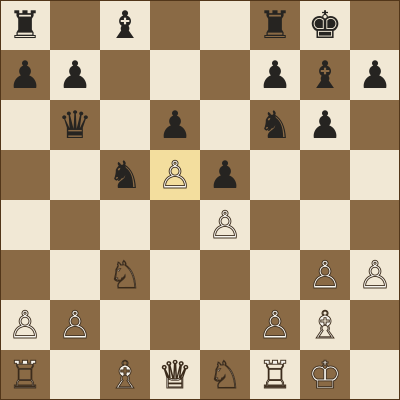
A few moves on, after 12.Ne1: White's pawn on d5 (highlighted) clamps the centre and Botvinnik manoeuvres his knight toward the queenside. It is exactly the kind of "quiet" position Tal loved to detonate — and from a setup like this came the stunning 21...Nf4!!, sacrificing the knight on f4. After 22.gxf4 exf4 the dark squares around Botvinnik's king collapsed and Black's pieces poured through.
The 21...Nf4 sacrifice is the kind of move that built Tal's legend: not a forced combination, but a judgment that the resulting attack was worth more than a piece. Botvinnik, one of the greatest defenders alive, could not hold. Botvinnik would win the rematch a year later — he had earned an automatic return match and prepared specifically to dampen Tal's fireworks — but the 1960 games are the ones the chess world remembers.
Where his games live in this library
The art of the sacrifice
Tal is the patron saint of chess tactics — the forks, pins, and sacrifices that turn material into mating attacks. If you want to understand why a piece sacrifice can be worth more than the piece, his games are the textbook.
Sharp openings
Tal thrived in the sharpest openings — the Sicilian as both colors, and the romantic King's Gambit, whose spirit of attack-at-all-costs matched his own. He sought positions where the initiative outweighed the material count.
Mikhail Tal — FAQ
Why was Mikhail Tal called the Magician from Riga?
Tal, from Riga, Latvia, played sacrificial attacking chess so bold and so hard to calculate that opponents felt bewitched. He routinely sacrificed material for initiative in positions whose soundness could not be verified at the board — and won, again and again. His hometown plus his seemingly supernatural attacks earned the nickname.
When did Tal become world champion?
In 1960, at age 23, Tal defeated Mikhail Botvinnik 12.5–8.5 to become the youngest world champion to that point. Botvinnik won the return match in 1961 and reclaimed the title, but Tal's 1960 victory — built on relentless sacrifices — is one of the most celebrated runs in history.
Were Tal's sacrifices actually sound?
Often not in the strict, computer-verified sense — and Tal knew it ("There are two kinds of sacrifices: correct ones, and mine"). His genius was practical: he created positions so complex that opponents, under pressure and on the clock, could not find the defense. Engines refute some of his combinations, but at the board they were nearly unstoppable.
Botvinnik–Tal 1960, the d5 clamp after 12.Ne1 — the locked centre Tal blew open with 21...Nf4 on the way to the title.
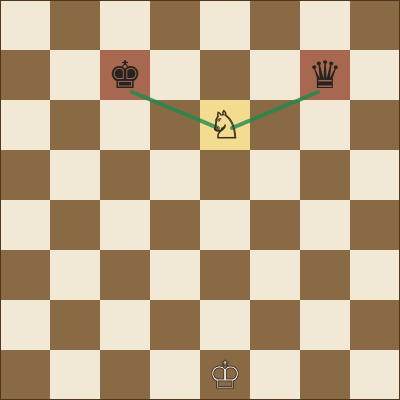
The tactics that powered Tal's attacks — forks, pins, and sacrifices, the building blocks of every combination.
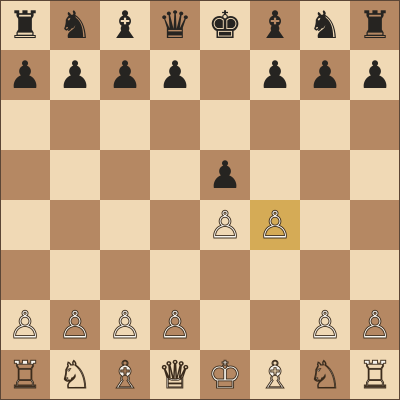
The King's Gambit — the romantic attacking opening whose spirit matched Tal's own at its sharpest.
- Tal, M. The Life and Games of Mikhail Tal (autobiography).
- Kasparov, G. My Great Predecessors, Vol. II (Tal).
- Botvinnik–Tal, World Championship 1960, Game 6 (game record).
- ECO classification E (King's Indian Defence).
Mikhail Tal — Part 1 of 2
The 1960 title was the peak, but the magic never stopped. Part 2 dives into the immortal sacrifices, the famous "two kinds of sacrifices" creed, and the record unbeaten streak that crowned his later career.
Continue to Part 2: The Immortal Sacrifices → · All Champions →