Tal's Immortal Sacrifices
The 1960 world title made Mikhail Tal famous; the sacrifices made him immortal. This is the chess at the heart of the legend — the philosophy behind the speculative piece offer, the combinations that left the world's best defenders helpless, and the record-setting resilience that proved the Magician was far more than a gambler.
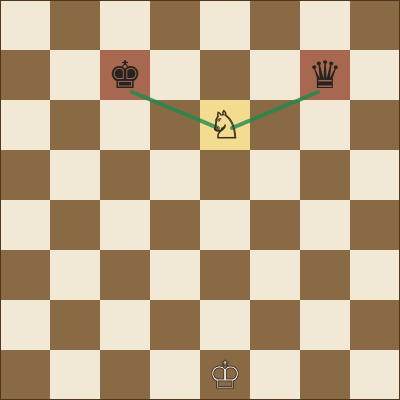
Tactics were Tal's native language — forks, pins, and above all the sacrifice, the deliberate gift of material to open lines toward the enemy king. Where others calculated to be sure, Tal calculated to create chaos, trusting that his opponent would crack first.
Into the deep dark forest
Tal explained his method better than anyone else could, in the most quoted line in chess:
"You must take your opponent into a deep dark forest where 2+2=5, and the path leading out is only wide enough for one."
That is the speculative sacrifice in a sentence. Tal did not always know his attacks were sound — often they were not, by the cold light of an engine. What he knew was that a human being, handed a wildly complicated position and a ticking clock, would fail to find the one narrow path to safety. He manufactured complexity on purpose and let his opponents drown in it. The material he gave up bought him time, open lines, and above all the initiative — the right to keep making threats while the defender scrambled.
Sacrifices that defined attacking chess
Tal's games are an anthology of unforgettable attacks. Against Bent Larsen in the deciding tenth game of their 1965 Candidates match he hurled a knight into the centre with 16.Nd5!! — a speculative sacrifice analysts were still arguing about years later — and won the brilliancy that decided the match. Again and again he offered knights and bishops on squares that "could not" be given up — and again and again the attack proved too fast to meet. Even when later analysis found a defence, the practical verdict at the board was almost always the same: Tal's pieces got there first.
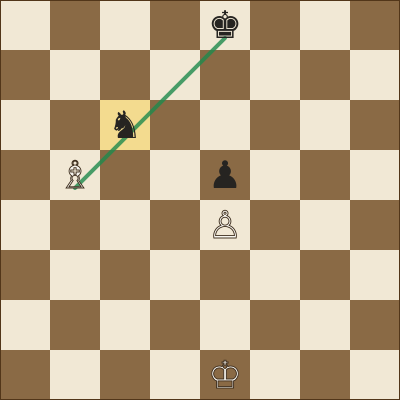
The pin — one of the recurring motifs in Tal's attacks. He wove forks, pins, and decoys into sacrificial combinations so dense that defenders, however strong, could rarely untangle them in the time available.
What makes the games endure is their fearlessness. Tal accepted that some of his sacrifices were objectively unsound and played them anyway, because chess is contested by people, not engines — and against people, the storm almost always won.
The 1961 rematch and a record streak
The fireworks had a price. Botvinnik, granted an automatic return match in 1961, prepared meticulously to calm the position and exploit Tal's notoriously fragile health, and reclaimed the title. Tal never regained the crown — but he was far from finished.
Across 1972–73, Tal went 95 consecutive games unbeaten — at the time the longest such streak in elite chess history, a record that stood for decades until Ding Liren surpassed it. For a player remembered as a reckless attacker, it was a stunning display of consistency, and proof that behind the chaos was a complete and resilient master. He remained a feared competitor and a peerless blitz player for the rest of his life.
Learn the tools of the attack
The tactics behind the magic
Every Tal sacrifice rests on tactics. The chess tactics guide covers the forks, pins, and skewers that are the building blocks of his combinations.
The romantic openings
Tal's spirit lives in the sharpest openings — the Sicilian and the King's Gambit, where the attack is worth more than the material count.
Tal's Sacrifices — FAQ
What did Tal mean by the "deep dark forest"?
His most famous line — "take your opponent into a deep dark forest where 2+2=5, and the path leading out is only wide enough for one" — describes his method: create positions so complex that calculation breaks down and the opponent, not he, gets lost. It is the speculative sacrifice as a practical weapon.
How long was Tal's unbeaten streak?
He went 95 consecutive games without a loss across 1972–73 — at the time the longest unbeaten streak in elite chess history. It stood for decades until Ding Liren surpassed it, and proved the famous attacker was also tremendously resilient.
Why did Tal lose the title back to Botvinnik in 1961?
Botvinnik held the right to an automatic return match and prepared specifically to blunt Tal's attacks — steering toward calmer, technical positions and exploiting Tal's fragile health. Better prepared and more disciplined, he won convincingly.
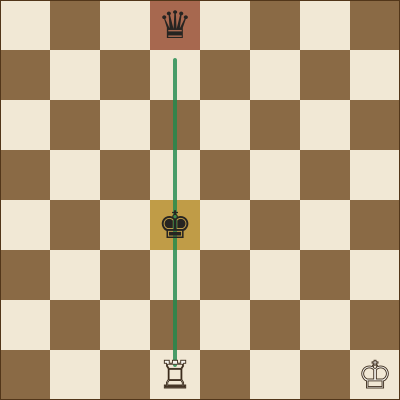
The skewer — another of the tactical weapons Tal wielded inside his sacrificial storms.
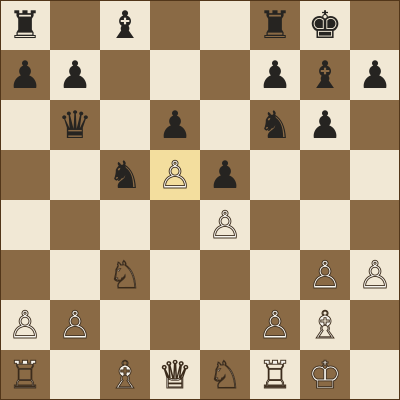
The 1960 title game (Part 1) — the locked centre Tal blew open with 21...Nf4.
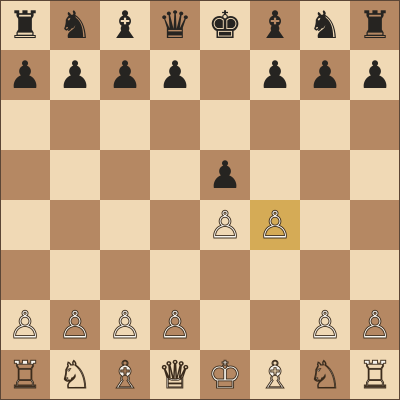
The King's Gambit — the romantic attacking spirit that matched Tal's own.
- Tal, M. The Life and Games of Mikhail Tal (autobiography).
- Tal–Larsen, Candidates 1965 (game record).
- Tal's 1972–73 unbeaten streak (95 games) records.
- Kasparov, G. My Great Predecessors, Vol. II (Tal).
Mikhail Tal — Part 2 of 2
That completes the Tal guide — the Magician's rise, his 1960 crown, and the sacrifices and resilience that made him a legend. Explore more champions or the tactics behind the magic.