
Chess Tactics
Openings get you to a playable middlegame — but tactics win games. The fork, the pin, the skewer, the discovered attack, and the double attack are the patterns that win material and end games on the spot. Learn these five and you will spot winning shots your opponents never see coming.
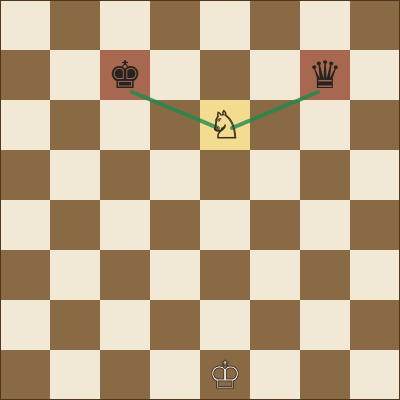
The fork in action: a single white knight on e6 attacks both the black king and queen at once. Tactics like this — short, forcing sequences that win material — are the engine of practical chess.
What is a tactic?
A short, forcing sequence — usually checks, captures, and threats — that wins material or delivers mate
The big five
Fork, pin, skewer, discovered attack, double attack — the patterns behind most won games
Why they matter
Below master level, tactics decide the vast majority of games. Pattern recognition is king
How to improve
Solve puzzles daily. Fifteen minutes a day of tactics training transforms results
The Fork
A fork is one move that attacks two or more pieces at once. The opponent can only save one, so you win the other. The knight is the most feared forking piece because its L-shaped jump cannot be blocked and is easy to overlook — but every piece can fork. The most devastating version is the royal fork: a single knight attacking the king and queen together, forcing the king to move and winning the queen.
A royal fork. The white knight on e6 (highlighted) attacks the black king on c7 and the queen on g7 simultaneously. Black must move the king out of check — and White scoops up the queen next move.
The Pin
A pin freezes an enemy piece in place. Using a bishop, rook, or queen, you attack a piece that has a more valuable piece directly behind it on the same line. The pinned piece cannot legally move (if the king is behind, it is an absolute pin) or dare not move (a relative pin). Once a piece is pinned, you can pile more attackers on it and win it, because it cannot run.
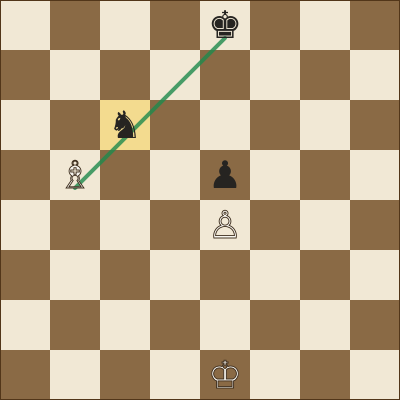
An absolute pin — the famous Ruy Lopez pin. White's bishop on b5 pins the black knight on c6 (highlighted) against the king on e8. The knight is paralyzed: moving it would illegally expose the king, so it sits there as a target.
The Skewer
A skewer is a pin turned inside out. Again you use a bishop, rook, or queen along a line — but this time the valuable piece is in front. You attack it, it is forced to move out of the way, and you capture the piece that was hiding behind it. Skewering the king to win the queen behind it is one of the most common ways to win a game outright.
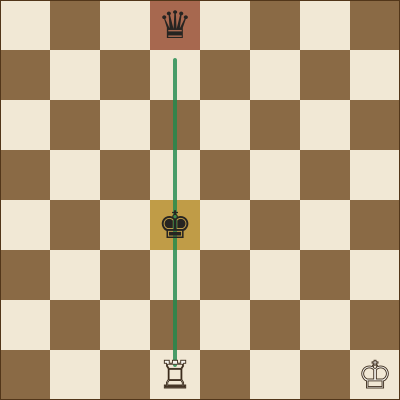
A skewer down the d-file. White's rook on d1 checks the black king on d4 (highlighted). The king must step off the file — and the rook captures the queen on d8 that was standing behind it.
Discovered attacks and double attacks
The Discovered Attack
When you move one piece and, by stepping aside, unveil an attack from a piece behind it, that is a discovered attack. Because two threats appear from a single move, they are brutally effective. The deadliest form is the discovered check: the moving piece grabs something or makes its own threat while the king is in check and must respond first.
The Double Attack
The double attack is the family that forks, discoveries, and many skewers all belong to: any move that creates two threats at once. The defender can only meet one. Training your eye to look for moves that do two jobs — attack and threaten, check and win a piece — is the heart of tactical vision.
Chess Tactics — FAQ
What are the most important chess tactics for beginners?
The five core tactics: the fork (one piece attacks two), the pin (a piece can't move without exposing a more valuable one), the skewer (the reverse of a pin), the discovered attack (moving one piece unveils another's attack), and the double attack (two threats at once). Master these and you will win material in most games.
What is a fork in chess?
A fork is one move that attacks two or more enemy pieces at the same time. The knight is the most famous forking piece because its L-shaped attack cannot be blocked, but any piece can fork. The deadliest is the royal fork — king and queen attacked together.
What is the difference between a pin and a skewer?
Both are line tactics with a bishop, rook, or queen. In a pin, the less valuable piece is in front and can't move because a more valuable one sits behind it. In a skewer, the valuable piece is in front, is forced to move, and the piece behind is captured.
How do I get better at chess tactics?
Solve puzzles every day. Pattern recognition is the biggest factor in improvement below master level — the more tactics you have seen, the faster you spot them. Free puzzle trainers on Lichess and Chess.com are ideal; fifteen minutes a day produces dramatic results.
The fork — one piece, two targets. The knight's unblockable L-shape makes it the deadliest forking piece on the board.
The pin — a piece frozen in place because a more valuable one stands behind it. Pile on attackers and win it.
The skewer — a pin in reverse. The valuable piece must step aside, and you capture what was hiding behind it.
- Chernev, I. & Reinfeld, F. Winning Chess: How to See Three Moves Ahead.
- Heisman, D. (2008). Back to Basics: Tactics. Russell Enterprises.
- Lichess.org and Chess.com puzzle trainers (free daily tactics).
Diagrams are illustrative teaching positions created for this guide.
From winning material to delivering mate
Tactics win pieces — but the goal is the king. Part 2 covers the checkmate patterns every player must recognize, from the back-rank mate to the beautiful smothered mate.
Continue to Part 2: Checkmate Patterns → · All Chess Guides →