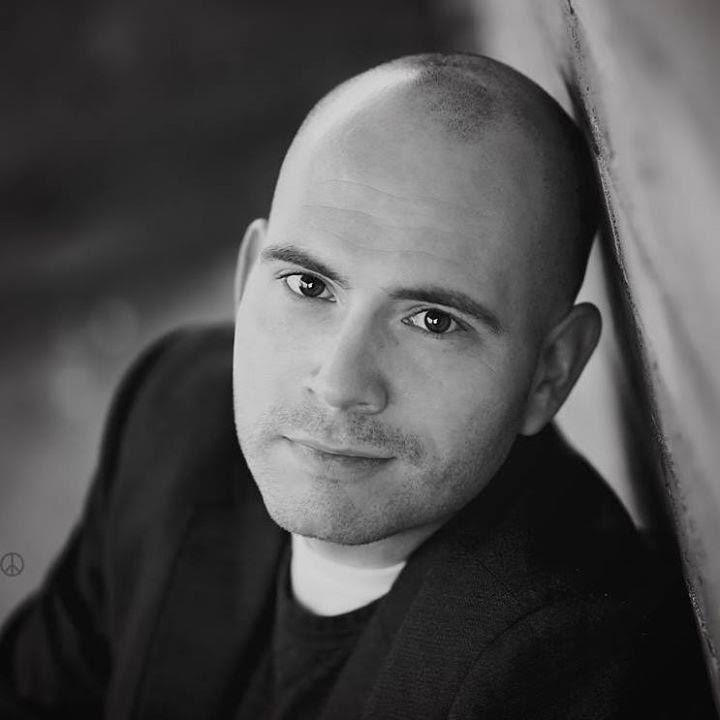
Mikhail Botvinnik
The Patriarch. World Champion across three reigns between 1948 and 1963, Mikhail Botvinnik was the architect of the Soviet chess machine — an electrical engineer who treated chess as a science of preparation, analysis, and discipline. He didn't just win the title; he built the system and the school that would dominate world chess for half a century.
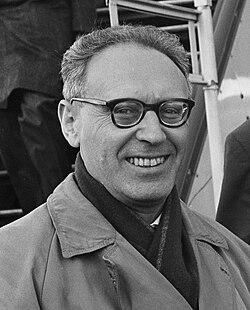
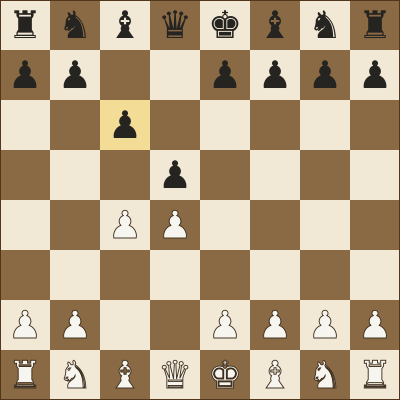
The Semi-Slav — home of the razor-sharp Botvinnik Variation, one of many opening systems he analyzed to extraordinary depth. Botvinnik's contribution to chess was, above all, this: the idea that the opening could be researched like a laboratory problem, prepared in advance, and turned into a decisive weapon.
Lived
1911–1995 · born Kuokkala (near St. Petersburg), Russia
World Champion
1948–1957, 1958–1960, 1961–1963 — three reigns
Style
Scientific preparation, strategic depth, iron self-discipline
Legacy
Trained Karpov, Kasparov, and Kramnik at his chess school
Chess as a discipline
Botvinnik approached chess the way he approached engineering: methodically. He pioneered systematic opening preparation, ruthless objective analysis of his own games, and even physical and psychological training routines — practicing in smoke-filled rooms with a radio on to harden his concentration. This research-driven method became the foundation of the Soviet school that produced champion after champion.
He won the 1948 tournament to take the crown left vacant by Alekhine's death, and then showed the resilience of his system in a remarkable way: when he lost the title to Vasily Smyslov in 1957 and to Mikhail Tal in 1960, he used his right to an automatic return match to out-prepare each younger rival and win the crown straight back.
Where his games live in this library
The Semi-Slav & 1.d4
Botvinnik's deep analysis of the Slav and Semi-Slav — including the sharp variation that bears his name — exemplifies his belief that preparation wins games before they begin.
Flank and classical systems
He was equally at home in the English Opening and the classical 1.d4 and 1.e4 main lines — a complete, scientifically grounded repertoire.
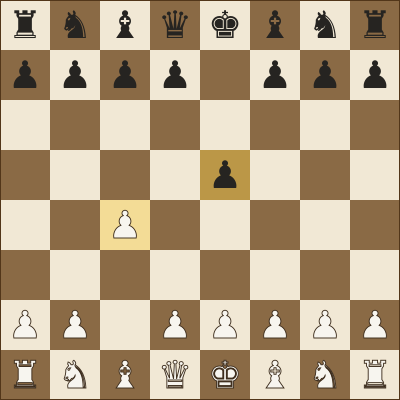
The English Opening (1.c4) — one of the flank systems Botvinnik handled with deep strategic understanding, treating its long-term structural questions as problems to be solved by preparation.
Mikhail Botvinnik — FAQ
Why is Botvinnik called the Patriarch of Soviet chess?
He pioneered the scientific, research-based approach that defined the Soviet school for decades — systematic opening preparation, objective self-analysis, and disciplined training. He also founded a famous school whose students included three future world champions, making him the father figure of the era that dominated chess.
How many times was Botvinnik world champion?
Three separate reigns: 1948–1957, 1958–1960, and 1961–1963. He won the 1948 tournament for the vacant crown, then lost to Smyslov (1957) and Tal (1960) but reclaimed the title each time via the automatic return match.
Which champions did Botvinnik train?
His chess school produced three future undisputed world champions — Anatoly Karpov, Garry Kasparov, and Vladimir Kramnik — along with many other strong grandmasters.
The Semi-Slav — home of the sharp Botvinnik Variation and a showcase of his deep preparation.
The English Opening — a flank system Botvinnik handled with scientific, long-term strategy.
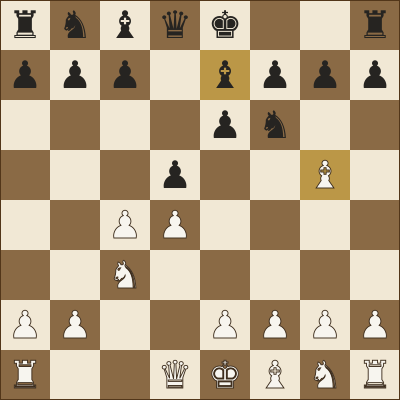
Classical 1.d4 — the disciplined, structurally rich chess at the heart of the Soviet school.
- Botvinnik, M. One Hundred Selected Games and his match books.
- World Championship tournament 1948 and return matches (1958, 1961) records.
- Kasparov, G. My Great Predecessors, Vol. II (Botvinnik).
- Histories of the Soviet chess school.
The lineage continues
Botvinnik's reigns gave way to his own challengers — Tal took the title in 1960, and the Soviet line ran on through Spassky, Karpov, and Kasparov, all shaped by his school. Explore the lineage.