Who is Janus?
Janus is among the most characteristically Roman gods. Two-faced and without a true Greek equivalent, he governs beginnings, endings, gates, doorways, passages, transitions, and the opening of ritual action. He is a god of liminality and temporal orientation — the deity of the threshold, who by his very form looks both forward and back at once. The month of January bears his name.
That liminal role is the key to understanding him. Where other Roman gods carry dramatic biographies, Janus is defined by function: he is the opening itself, the moment of passage from one state to the next.
Origins & history
Janus stands out precisely because he is not a Greek import. Much of Roman mythology borrows and renames Greek deities, but Janus has no such counterpart — he is distinctly Roman in origin and meaning. His authority over doorways and beginnings placed him at the very front of the Roman ritual and calendrical world.
Ovid's Fasti, the poet's calendar of the Roman year, opens with Janus because the calendar itself begins under his authority. The first month, and the first movement of any sacred action, belonged to the god of openings.
Cult & worship
Janus was woven into the structure of Roman rite rather than into a body of myth. Roman ritual often invoked Janus first and Vesta last, framing sacred action from entrance to completion: the god of the doorway opened the ceremony, the goddess of the hearth closed it. He opened not only rites but the year, and passages of every kind. The doors of his shrine were famously associated with war and peace — their state signaling the condition of the Roman community itself.
No Greek equivalent
Unlike Jupiter, Mars, or Saturn, Janus cannot be paired with an Olympian counterpart. He has no true Greek equivalent. That absence is itself significant: it shows that Roman religion was not simply Greek religion in Latin dress. Janus is a reminder that the Romans worshipped genuinely Roman gods whose meaning did not depend on a Greek original.
Famous myths & stories
The doors of war and peace
The doors of Janus's shrine were famously associated with war and peace. Their opening and closing marked the state of the Roman community — the god of the threshold standing, quite literally, at the boundary between conflict and calm.
First in every prayer
Roman ritual often invoked Janus first and Vesta last, framing sacred action from entrance to completion. To begin any rite was to pass through Janus; as the god of openings, he opened the year, the rites, wars, and passages alike.
The god of scarce myth
Janus has little narrative mythology compared with Jupiter or Mars. That scarcity is not insignificance: it shows how Roman cult could center on function and ritual without requiring a dramatic biography. Janus mattered not for what he did in story, but for where he stood in ritual — at every beginning.
Legacy & influence
Janus endures in language and thought. January carries his name; “Janus-faced” remains a byword for duality. His image supplies political metaphors for two-sidedness, informs architecture and its thresholds, and lends psychology and art a ready symbol of transition. Whenever a figure is described as looking two ways at once, it is reaching for Janus.
Symbolism
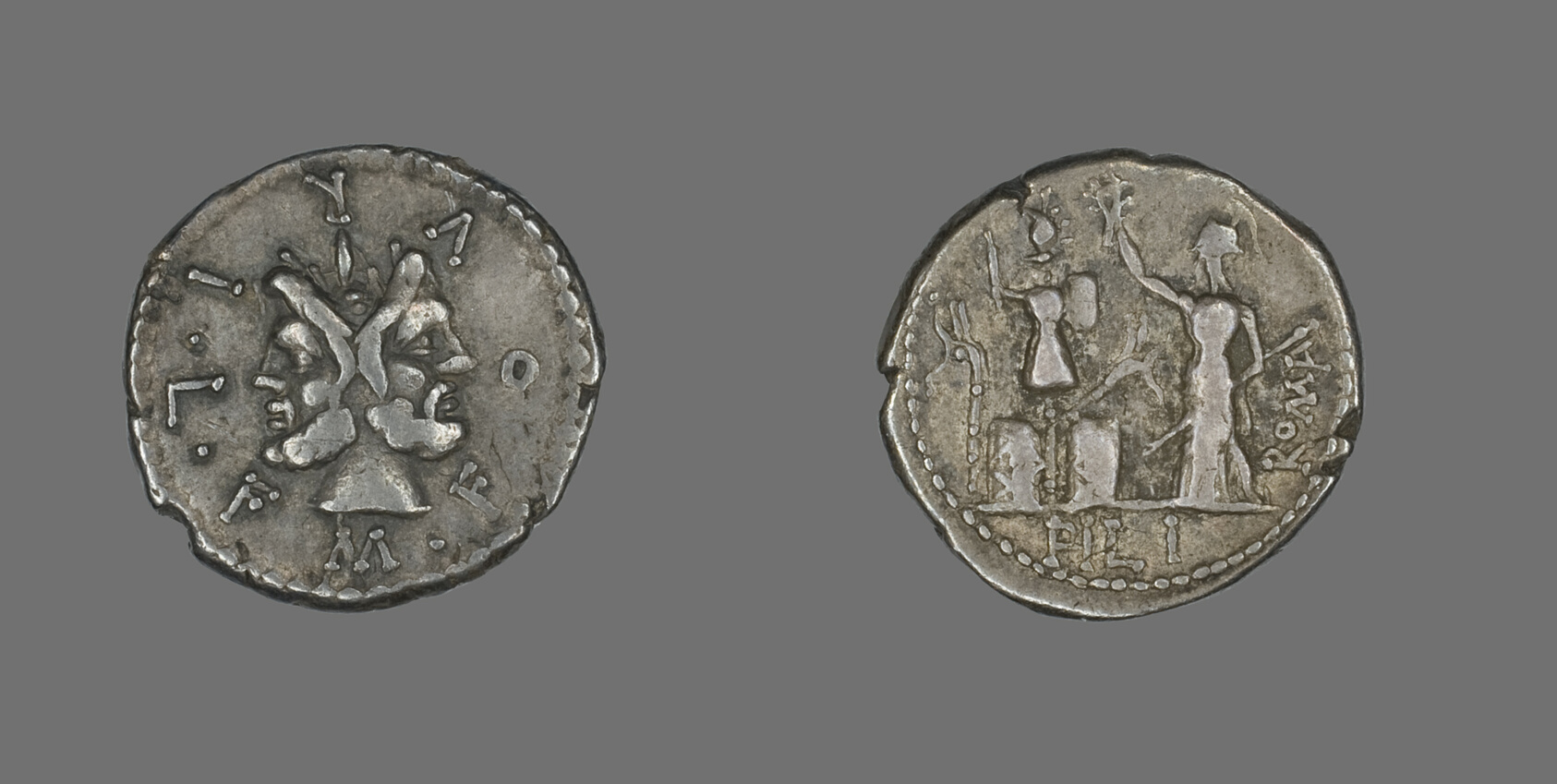
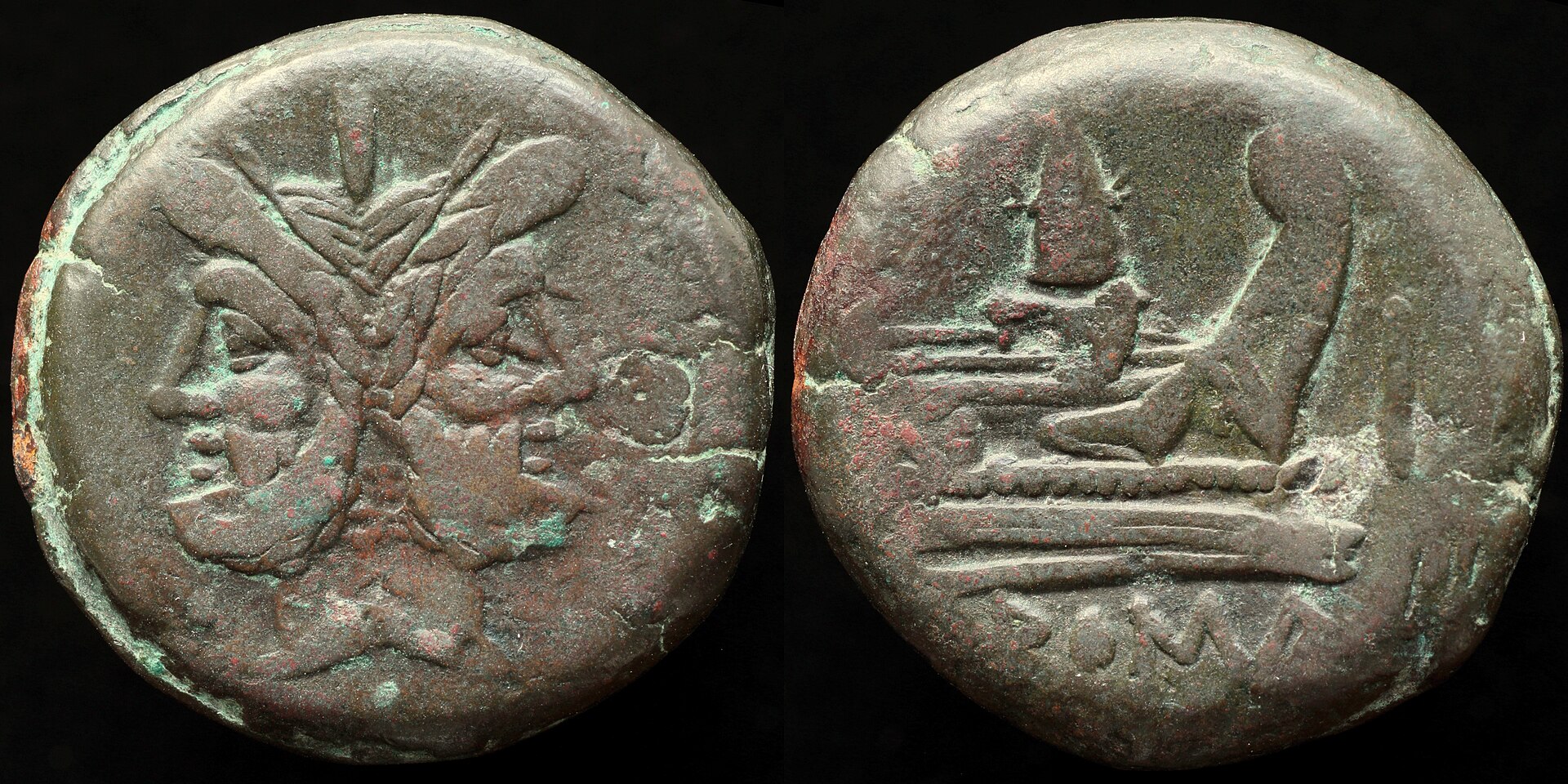
His two faces are the whole meaning: to see both front and back is to command the threshold — to look at once toward what is ending and what is beginning. The doorway and gate are passage and transition; the act of opening is his special province. Together they make Janus the god of orientation in time: the one who stands where before becomes after.
Famous public-domain depictions — click any image to view it full size.
Does Janus have a Greek equivalent?
No. Janus is among the most characteristically Roman gods and has no true Greek equivalent. Where much of Roman mythology borrows and renames Greek deities, Janus governs beginnings, gates, and transitions in a way that is distinctly Roman.
What was Janus the god of?
Beginnings, endings, gates, doorways, passages, and transitions, and the opening of ritual action. He is a god of liminality and temporal orientation, and the month of January bears his name.
Why is January named after Janus?
Because the calendar itself begins under his authority. Janus governs beginnings, so the opening of the year belongs to him; Ovid's Fasti opens with Janus for the same reason.
Why was Janus invoked first in Roman rituals?
As the god of openings and beginnings, Janus opened ritual action. Roman rite often invoked Janus first and Vesta last, framing sacred action from entrance to completion.
 Michael Paycer