Who is Vesta?
Vesta was the Roman goddess of the hearth and sacred fire. Her public flame, tended by the Vestal Virgins, symbolized the continuity and safety of Rome. She represented the sacred center — continuity, and domestic and civic stability — linking the private home to the well-being of the whole state.
Unlike most Roman gods, Vesta was worshipped less as a person than as a presence. Where Jupiter guaranteed sovereignty and Ceres the harvest, Vesta guaranteed continuity itself: as long as her fire burned, Rome endured.
Origins & history
Vesta belonged to the oldest stratum of Roman religion, rooted in the sacred fire of the household hearth. From that domestic origin her cult grew into a public institution at the heart of the city, where a single perpetual flame stood for the collective hearth of the Roman people. Cicero links her power to altars and hearths, while Ovid emphasizes that her nature is living flame rather than an anthropomorphic statue.
That emphasis on fire over image gave Vesta an unusually philosophical dimension. Ovid identifies her with the earth and the perpetual fire beneath it, reading the goddess as a natural principle as much as a person — a divinity you could interpret cosmologically as well as worship at the altar.
Cult & worship
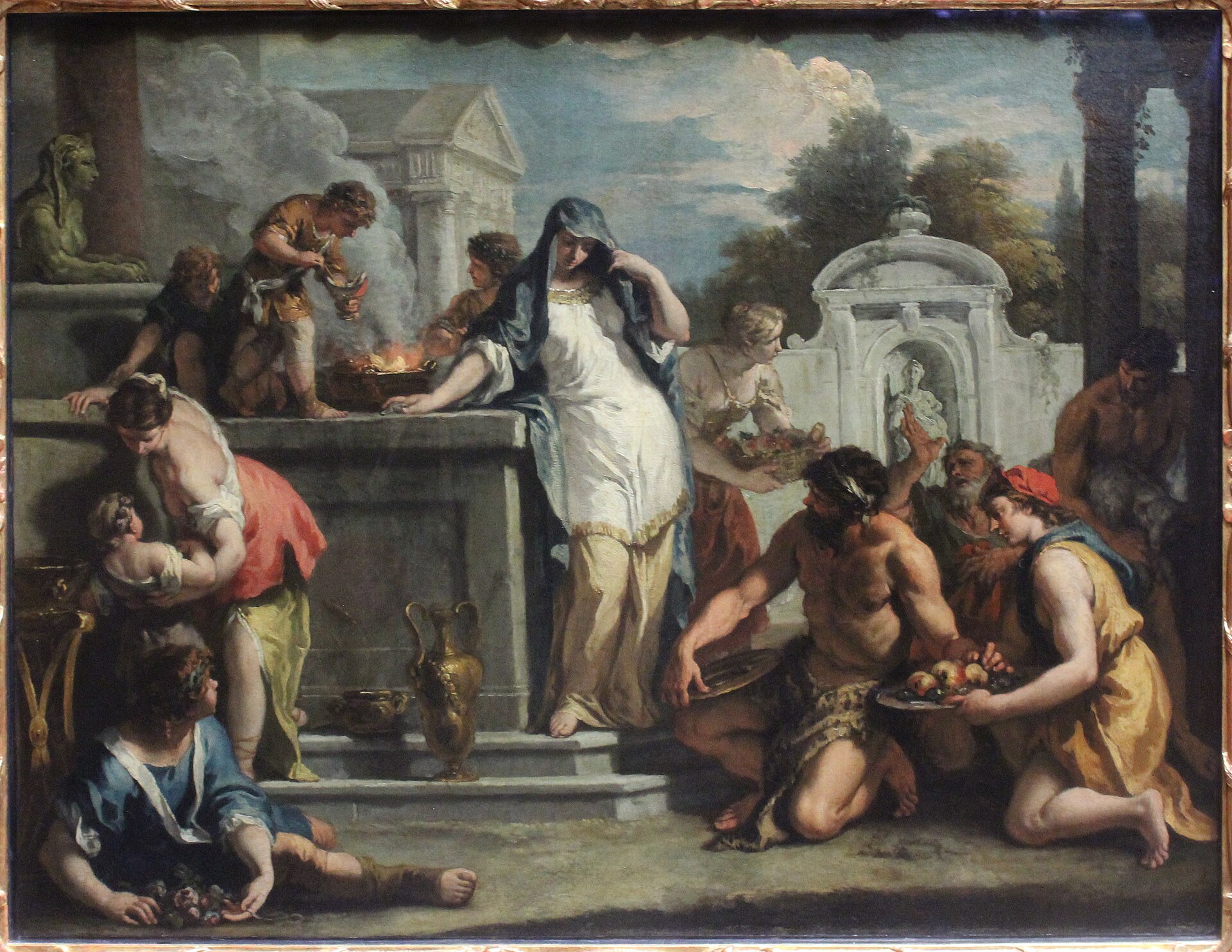
Vesta's cult centered on the Vestal Virgins, the priestesses who tended her perpetual public flame and preserved sacred objects, wills, and ritual continuity for the state. The Vestals enjoyed unusual legal privileges — a standing granted to almost no other women in Rome — but they were also subjected to severe discipline, including the notorious punishment of live burial for violating the vow of chastity. The prestige of the institution coexisted with extraordinary control over the bodies of the Vestal women. The endurance of the cult over centuries made the tended flame one of Rome's most powerful emblems of stability.
Greek equivalent
Vesta was the Roman counterpart of Greek Hestia, goddess of the hearth. Both preside over the sacred fire and the center of the home, and both are among the least narrative of the gods. But the identification is not the whole story: where Hestia remained largely a quiet domestic presence, Vesta's Roman cult became a great public institution, with the Vestal Virgins and the state flame at the very heart of the city.
Famous myths & stories
The goddess without a story
Vesta is deliberately less narrative than most gods. Her worship centers on the flame itself, not on a biography of loves and quarrels. That absence of myth is not a weakness of the cult but a limit on biographical storytelling — a reminder that some divinities were experienced as presences rather than characters.
The flame and the fate of Rome
The perpetual fire tended by the Vestals was read as a sign of Rome's continued life. To let it go out was a dire omen for the city, and its careful maintenance dramatized the belief that the safety of the state rested on unbroken sacred duty.
Fire, earth, and the cosmos
Ovid identifies Vesta with the earth and the perpetual fire beneath it — “Vesta is the same as the earth; beneath them both is a perpetual fire.” The hearth-goddess becomes a natural principle, a way of thinking about the living fire at the center of things.
Legacy & influence
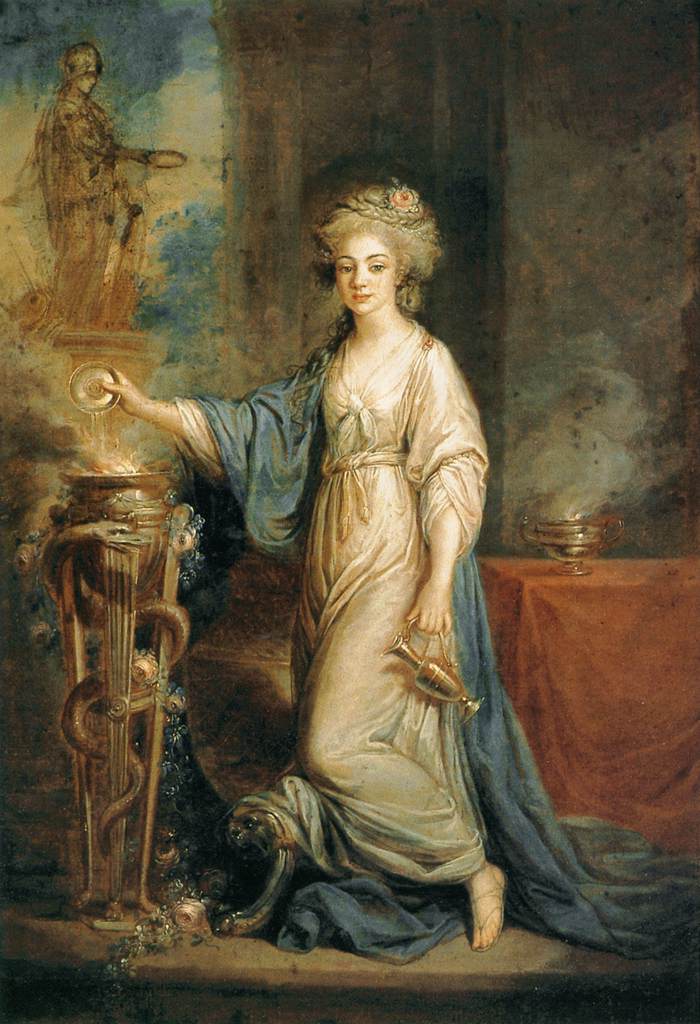
Vesta remains an emblem of hearth, continuity, and sacred civic duty. The word “vestibule” is traditionally associated through Vesta with the entrance and hearth sphere, though such etymological claims require caution. Her image — the tended flame, the veiled priestess — still stands wherever a culture reaches for the idea of an eternal fire or a sacred, unbroken watch.
Symbolism
Her symbols are unusually spare: the living flame is her true form, continuity and life itself; the hearth is the sacred center where home and state meet; the veil of the Vestals marks the purity and dedication her service demanded. Together they say what Roman religion meant by her — not a story but a duty, the fire that must never go out.
Famous public-domain depictions — click any image to view it full size.
Is Vesta the same as Hestia?
Vesta was the Roman counterpart of Greek Hestia, and both were goddesses of the hearth and its sacred fire. But Vesta's Roman cult was far more publicly institutional: her perpetual state flame was tended by the Vestal Virgins and treated as a guarantee of Rome's own continuity.
What was Vesta the goddess of?
The hearth and the sacred fire. She represented the sacred center, continuity, and domestic and civic stability, linking the private home to the safety of the state.
Who were the Vestal Virgins?
The priestesses who tended Vesta's perpetual public flame. They enjoyed unusual legal privileges but were also held to severe discipline, including the notorious punishment of live burial for breaking their vow of chastity.
Why was Vesta rarely shown as a statue?
Ovid emphasizes that Vesta's true nature was living flame rather than an anthropomorphic image. Her worship centered on the fire itself, which is why her mythology is deliberately less narrative than that of many other gods.
 Michael Paycer