The Olympians · Underworld · Death
Hades, Lord of the Underworld
Ruler of the dead — stern, inexorable, and widely misunderstood. He is not the Greek Satan. He is mortality itself.
 Michael Paycer
Ruler of the dead — stern, inexorable, and widely misunderstood. He is not the Greek Satan. He is mortality itself.
Michael PaycerRole
The underworld, the dead, hidden wealth
Symbols
Helm of invisibility, Cerberus, bident
Domain
The underworld
Family
Son of Cronus & Rhea; husband of Persephone
Hades rules the underworld and the dead. He is “the unseen one,” and also Plouton — lord of the hidden wealth (seeds, metals, minerals) that lies underground. He is stern and unyielding, but he is not evil.
He does not tempt mortals or torture sinners; he simply keeps the dead. The popular image of Hades as a devil is a later overlay, not the Greek one.
When Zeus and his brothers overthrew the Titans and divided the cosmos, Hades drew the realm beneath the earth. He rarely leaves it, and the Greeks were so wary of naming him that they often used euphemisms — Plouton, “the wealthy one” — instead.
His realm contained regions later moralized by poets and philosophers: the Asphodel Meadows for ordinary souls, Elysium for the blessed, and Tartarus for the punished. But Hades himself is a custodian, not a judge in the Christian sense.
Hades carried off Persephone, daughter of Demeter, to be his queen. Demeter's grief halted the harvest until a compromise was struck: Persephone spends part of each year below and part above — the Greek explanation for the seasons.
The musician Orpheus descended to win back his dead wife Eurydice. Hades and Persephone, moved by his song, allowed it on one condition — that he not look back until both reached the light. He looked, and lost her. A myth about grief, art, and the irreversibility of death.
Hades' cap of invisibility, lent to heroes like Perseus, made its wearer unseen — fitting for the lord of the realm no living eye can look upon.
For his trickery, Sisyphus was condemned in Hades' realm to roll a boulder uphill forever, only to watch it roll back down. His endless, futile labor became the modern emblem — through Camus — of the absurd human condition.
When the heroes Theseus and Pirithous descended to abduct Persephone, Hades trapped them in the Chair of Forgetfulness. Only Theseus was eventually freed by Heracles — a warning about mortals who overreach the boundary of death.
As Pluto, Hades gave his name to the dwarf planet at the edge of the solar system and to "plutocracy" (rule by the wealthy, from his role as lord of the earth's hidden riches). His three-headed dog Cerberus is one of mythology's most recognizable monsters.
His realm shaped the Western geography of the afterlife — Elysium, Tartarus, the rivers Styx and Lethe — imagery that runs through Virgil and Dante into modern fantasy. And the philosophical use the Greeks made of him, treating mortality as the frame that gives life its urgency, remains his most lasting contribution.
Hades' symbols are fittingly hidden: the helm of invisibility (the unseen, the unknowable), the three-headed Cerberus (the guarded threshold no one recrosses), and the bident and dark cypress of mourning. As Plouton he also holds the earth's buried wealth — death and hidden riches in one figure.
He represents mortality itself, and the part of life we would rather not look at. Depth psychology reads his realm as the unconscious — what is buried, repressed, or grieved. To descend to Hades and return, as heroes do, became the West's great symbol of confronting death and the depths and coming back changed.
Famous public-domain depictions — click any image to view it full size.
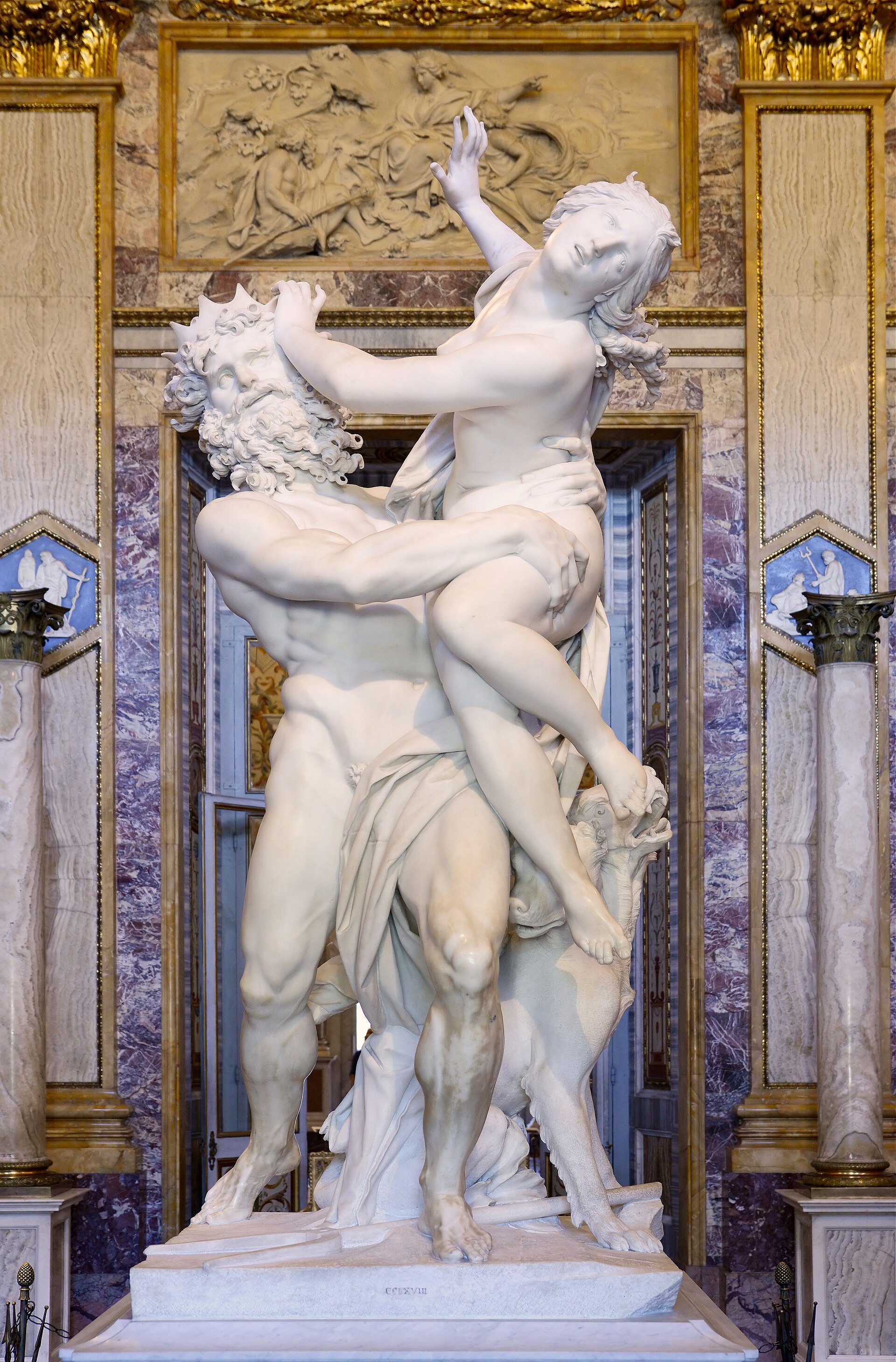
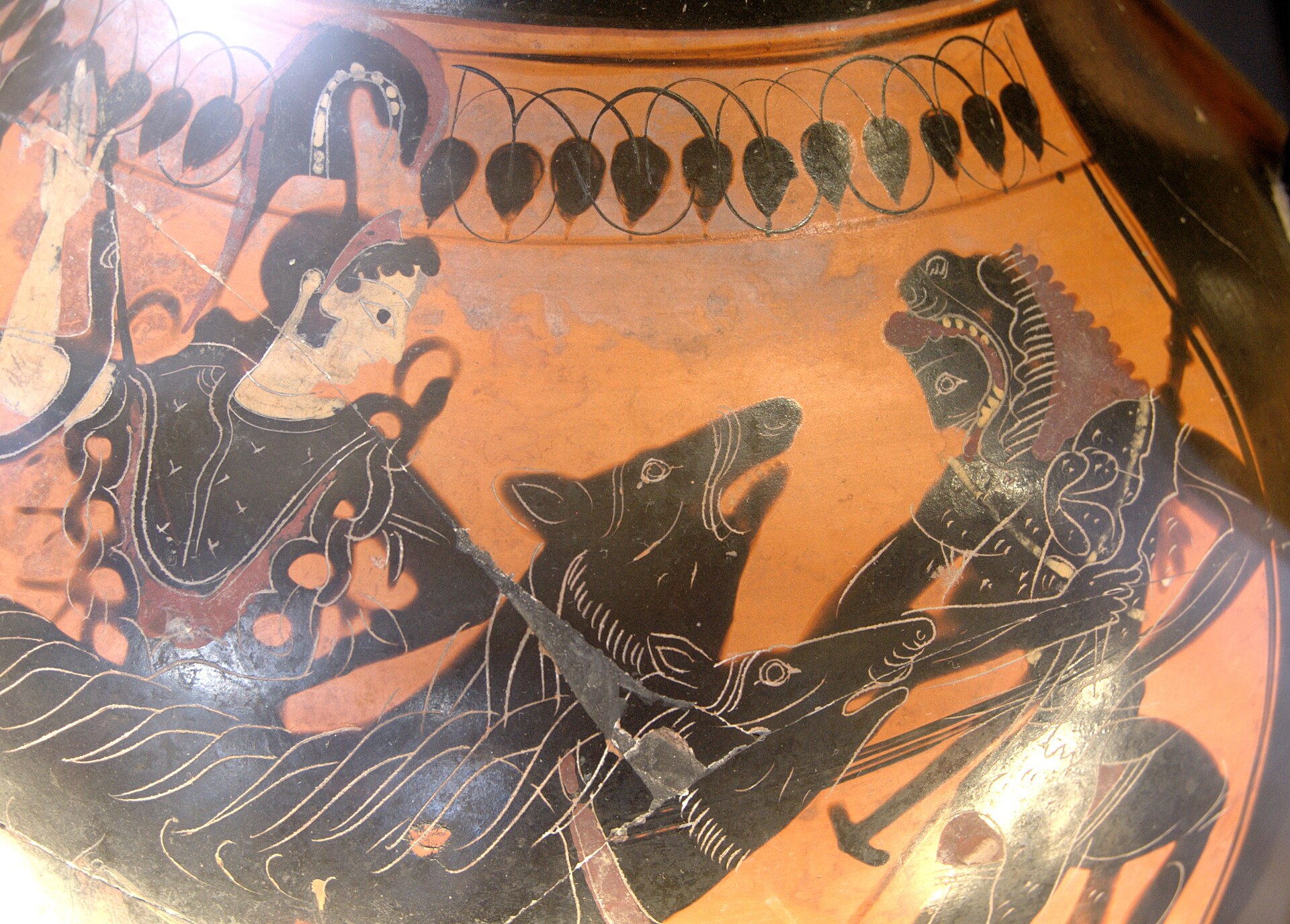
“I would rather be a hired hand, working for a poor man with little land, than be king over all the breathless dead.”
Homer, Odyssey 11 — the shade of Achilles
“Call no man happy until he is dead.”
Solon, in Herodotus, Histories
“There is no coming back from the house of Hades, no return.”
after Homer (paraphrase)
Hades is not the Greek Satan. He is mortality itself — and Greek philosophy keeps asking how the certainty of death should shape the way we live.
For the Greeks, death frames the meaning of life rather than poisoning it. Socrates, condemned to die, faces death calmly — as either a dreamless sleep or a journey of the soul — and treats it as the final test of his commitment to truth (Plato's Apology and Phaedo).
The Stoics later make rehearsing mortality a daily practice: remembering that you will die is how you learn to live well now. Hades, the neutral keeper of that certainty, is the backdrop against which the examined life takes on its urgency.
Death as a stern, neutral, final realm — the keeper of what ends.
Rebirth and return — the twice-born god who overcomes death.
No. He is stern and unyielding as ruler of the dead, but he is not a tempter or a torturer of souls. Greek myth does not cast him as a force of evil; he simply governs death.
No — this is a common misconception. The parallel comes only from both ruling an 'underworld,' but Hades is a neutral keeper of the dead, not a fallen adversary or a punisher of sin.
Hades abducts Persephone to be his queen; Demeter's grief halts the harvest. A compromise has Persephone spend part of each year below and part above — the explanation for the seasons.
Largely yes. Pluto (Plouton, 'the wealthy one') is an alternative Greek title and the Roman name for the same god of the underworld.
When I am not reading Homer or Nietzsche, I tune databases, design high-availability systems, and run cloud migrations.