Christianity · Practice & History

Three children, six visits,
and a crowd that watched the sun.

In 1917, three shepherd children in rural Portugal said the Virgin Mary appeared to them, month after month, and promised a sign. On the day she named, a crowd of thousands — believers and skeptics, soaked by rain — reported that the sun spun and plunged toward the earth. Fatima is where a private vision met a very public witness. Here is what happened, with the reported and the documented kept apart.

Michael Paycer Michael Paycer
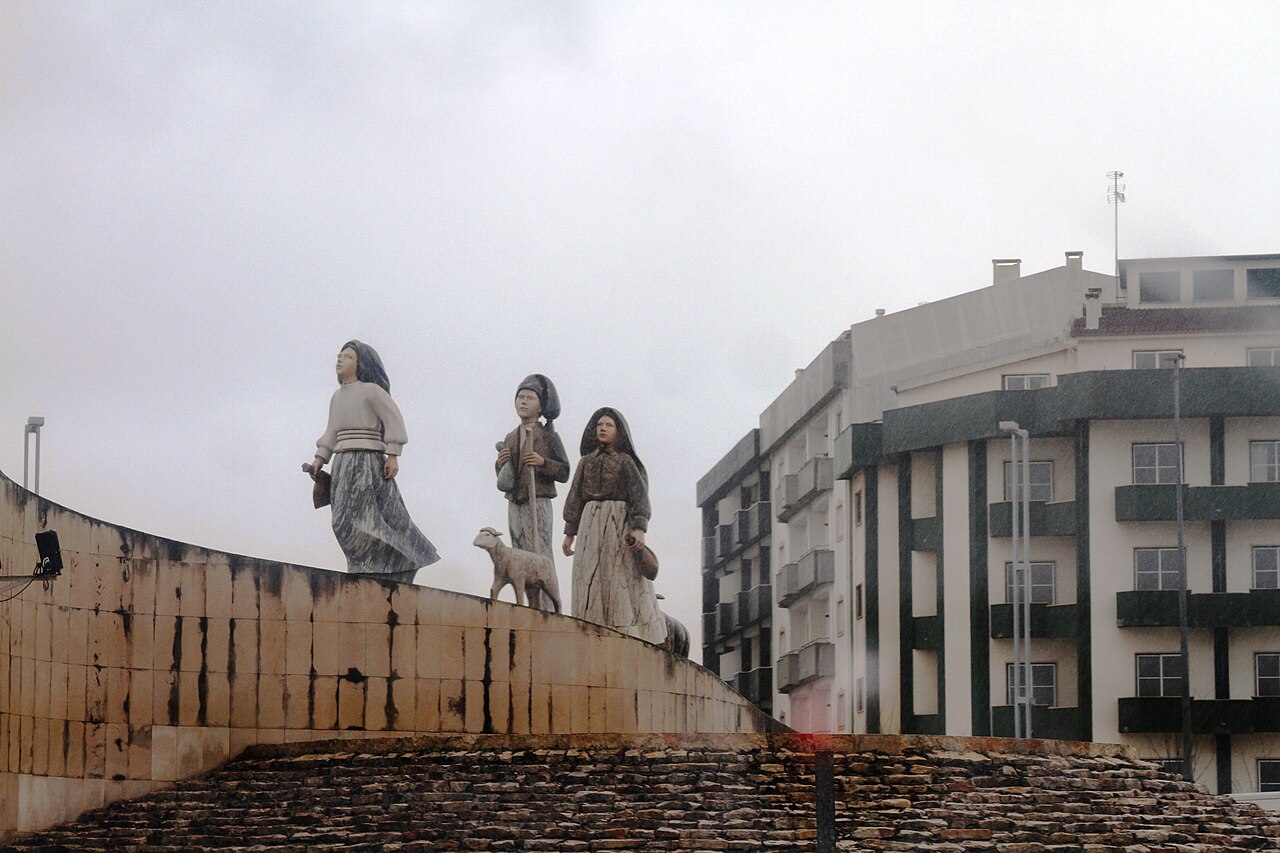
The three shepherd children of Fatima: Lúcia dos Santos, Francisco and Jacinta Marto, 1917
The three shepherd children. Lúcia dos Santos with her cousins Jacinta and Francisco Marto, the witnesses of the 1917 apparitions at Fatima. Photograph, 1917 · Public domain via Wikimedia Commons
In brief

Where & when

Fatima, Portugal — May to October 1917

The witnesses

Lúcia, Francisco & Jacinta — aged 10, 9, and 7

The message

Prayer, penance, and the daily rosary

The events

Six apparitions, and a promised sign

Beginning on May 13, 1917, and continuing on the 13th of each month, three children tending sheep at a spot called the Cova da Iria said a “Lady brighter than the sun” appeared to them. She asked them to return each month, to pray the rosary daily for peace, and — when doubters demanded proof — promised a miracle in October so that all would believe.

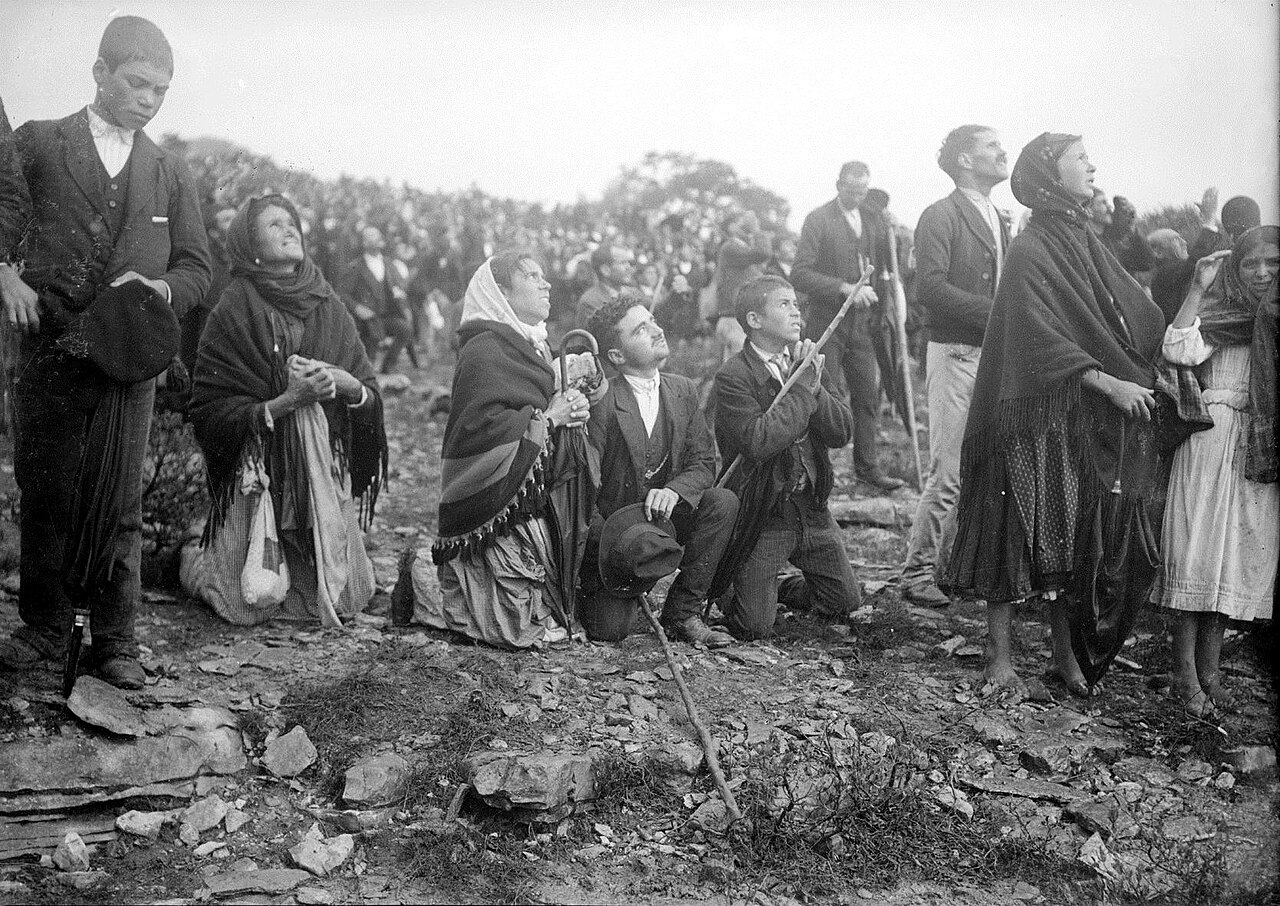
Word spread, and the crowds grew from a handful to thousands. Then came October 13. An estimated fifty to seventy thousand people gathered in a downpour at the Cova da Iria. According to many present — including reporters and skeptics who had come to debunk the affair — the rain stopped, the clouds parted, and the sun appeared to spin, throw off colors, and lurch toward the ground before returning to its place; witnesses also reported that their soaked clothes and the muddy field had dried. The event became known as the Miracle of the Sun, and it was reported in the Portuguese secular press, including the anticlerical Lisbon daily O Século.

What to make of it is where belief begins, and this page won't pretend to settle it. What can be documented is that a very large crowd assembled on a date announced in advance, and that many independent witnesses — friendly and hostile — described something extraordinary. The interpretation — a miracle, an optical or meteorological phenomenon, mass suggestion — is exactly what the sources leave open, and honest treatment holds the witnessed facts and the explanations apart.
The crowd at the Cova da Iria looking toward the sun, 13 October 1917
The crowd looks up. Onlookers at the Cova da Iria during the reported Miracle of the Sun, October 13, 1917. Photograph, 1917 · Public domain via Wikimedia Commons
The message

The three secrets, and the rosary

The children said the Lady entrusted them with three “secrets.” The first was a frightening vision of hell. The second was a call to devotion to the Immaculate Heart of Mary and a warning that another, worse war would follow the First if humanity did not change — later read as foretelling the Second World War. The third the Vatican kept private until the year 2000, when it was revealed as a symbolic vision of a “bishop dressed in white” falling under gunfire amid a ruined city; the Church associated it with the twentieth century's persecution of Christians and with the 1981 assassination attempt on Pope John Paul II, who credited Our Lady of Fatima with saving his life.

Underneath the drama, the message the children reported was strikingly simple and repetitive: pray, do penance, and say the rosary every day for peace. The Lady is said to have named herself “the Lady of the Rosary,” which is why Fatima and that devotion are bound so tightly together. The greeting at the heart of the rosary reaches back to Scripture itself — the angel's words to Mary at the Annunciation:

“Hail, thou that art highly favoured, the Lord is with thee: blessed art thou among women.”— Luke 1:28 (KJV)
Since then

Approval, pilgrimage, and sainthood

In 1930, after years of investigation, the local bishop declared the apparitions “worthy of belief,” and Fatima grew into one of the largest Marian pilgrimage sites in the world, drawing millions each year. Francisco and Jacinta Marto both died young in the influenza pandemic that swept the world after the war; the Church canonized them as saints in 2017, on the hundredth anniversary. Lúcia lived to 97 as a Carmelite nun. It's worth being precise about status: even a fully approved apparition is classified by the Church as private revelation — something the faithful are permitted to believe and encouraged by, but not bound to as they are to Scripture and the creeds.

The through-line

Fatima is unusual precisely because it isn't only a private vision. A date was named in advance, a crowd assembled, and hostile witnesses wrote it down — which is why, a century on, it still refuses to be quietly filed away.

My reflection — coming

This page lays out what was reported and what can be documented at Fatima. What it means to me — personally — belongs in its own space, and a reflection will live here soon. — Michael

Common questions

People also ask

What was the Miracle of the Sun?

On October 13, 1917, a large crowd at Fatima — estimated at 50,000–70,000 — reported that the sun spun, threw off colors, and appeared to plunge toward the earth before returning to place. It had been promised in advance as a sign, and was reported even in the secular press.

Are Catholics required to believe in Fatima?

No. Fatima is Church-approved but classified as private revelation — the faithful may believe it and are encouraged by it, but are not bound to it the way they are to Scripture and the creeds.

What is Fatima's connection to the rosary?

The central message was to pray the rosary daily for peace, and the apparition is said to have identified herself as “the Lady of the Rosary.” See The Rosary.

Sources
The day job

Built by a SQL Server consultant

When I'm not weighing what a crowd saw in 1917, I tune databases, design high-availability systems, and run cloud migrations.

See what I do →