The Olympians · Wine · Ecstasy · Theater
Dionysus, God of Ecstasy
Wine, madness, theater, and rebirth — the part of being human that no amount of reason will tidy away.
 Michael Paycer
Wine, madness, theater, and rebirth — the part of being human that no amount of reason will tidy away.
Michael PaycerRole
Wine, ecstasy, theater, madness, rebirth
Symbols
Grapevine, ivy, thyrsus, leopard
Domain
Festival; the irrational
Family
Son of Zeus & the mortal Semele
Dionysus is the god of wine, ritual ecstasy, theater, and transformation. He dissolves boundaries: between sober and drunk, self and crowd, human and animal. His followers, the maenads, abandon ordinary identity in collective frenzy.
He is also the patron of tragic theater — Greek drama grew from festivals in his honor. Dionysus is delight and liberation, but also the danger of forces that reason tries to repress.
Son of Zeus and the mortal princess Semele, Dionysus is the rare major Olympian with a mortal parent. When Semele was destroyed by the sight of Zeus's full glory, Zeus sewed the unborn child into his thigh until birth — hence “twice-born,” a god of death and return.
His worship spread through ecstatic cults and, at Athens, through the great dramatic festival of the City Dionysia, where the tragedies of Aeschylus, Sophocles, and Euripides were first performed. Theater itself was a religious act in his honor.
In Euripides' Bacchae, King Pentheus of Thebes refuses to honor Dionysus and tries to suppress his rites. The god drives the city's women into frenzy; Pentheus, spying on them, is torn apart by his own mother in her ecstasy. The lesson is grim: deny the Dionysian and it destroys you anyway.
Dionysus travels the world spreading the vine and his rites, repeatedly persecuted and reborn. His myths of dismemberment and return made him central to mystery cults promising renewal beyond death.
Finding Ariadne abandoned on Naxos, Dionysus takes her as his bride and sets her crown among the stars — one of the few tender pairings in his otherwise turbulent story.
When King Midas cared for Dionysus' companion Silenus, the god granted him any wish. Midas asked that all he touched turn to gold — and nearly starved, since his food and drink turned to metal too. A fable about greed, granted by the god of excess.
Captured by pirates who failed to recognize him, Dionysus filled their ship with vines and wild beasts and turned the terrified crew into dolphins. To deny the god, his myths warn, is to be undone by the very forces he commands.
Dionysus is the patron of the theater itself: Western drama was born at his Athenian festival, and every play since carries that inheritance. The Greek terms for tragedy and comedy, and the masks that still symbolize the stage, descend directly from his rites.
Through Nietzsche's The Birth of Tragedy, the "Dionysian" became a central idea of modern thought — the necessary counterweight to Apollo, the wild creative energy without which art and life go cold. From Romantic poetry to rock music, the god of intoxication and transformation keeps returning.
The vine and ivy are Dionysus's signs of fertility and intoxication — life that overflows its limits. The leopard is wild, untamed instinct; the mask is theater, ecstasy, and the dissolving of the fixed self into another. Everything about him points beyond the boundaried individual.
He symbolizes the return of what reason represses — desire, ecstasy, the irrational energies that culture tries to contain. To honor him is to admit that a full human life cannot be all order, and that what we refuse to acknowledge in ourselves can, like the god in the Bacchae, return with terrible force.
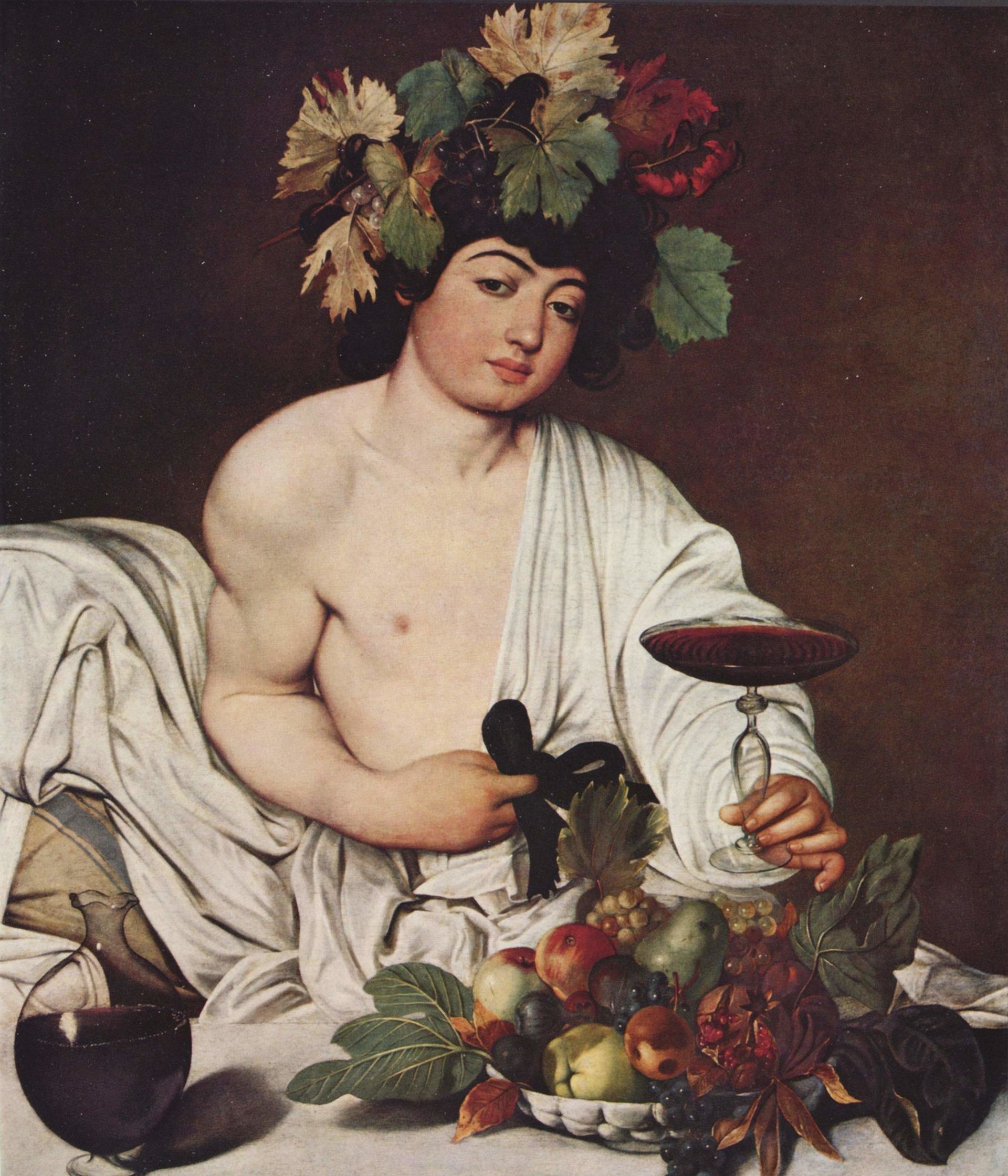
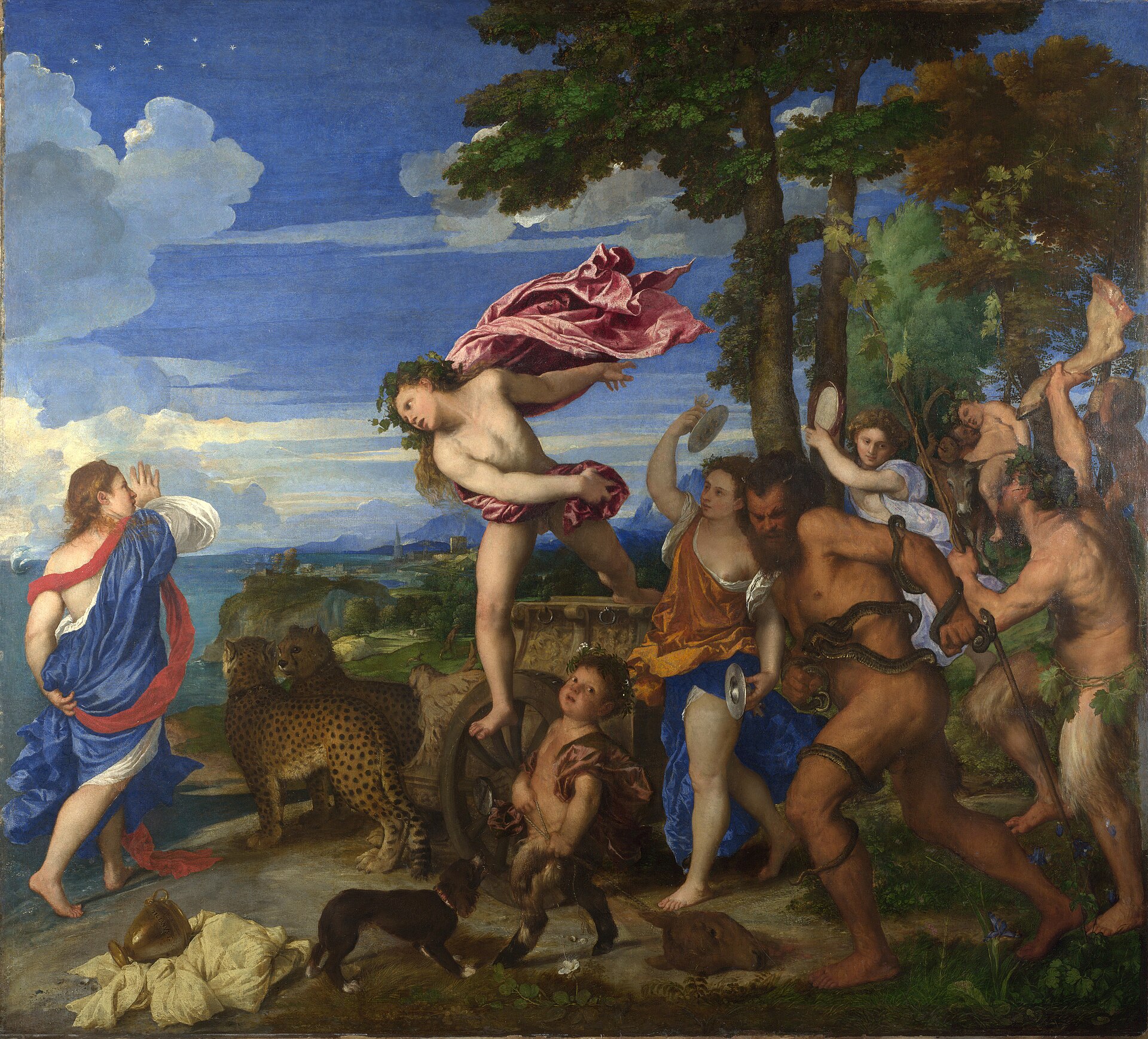
Famous public-domain depictions — click any image to view it full size.
“It is only as an aesthetic phenomenon that existence and the world are eternally justified.”
Friedrich Nietzsche, The Birth of Tragedy
“Cleverness is not wisdom.”
Euripides, Bacchae
“Whom the god wishes to destroy, he first makes mad.”
later proverb, often misattributed to Euripides
Dionysus is the part of being human that reason cannot govern — and Nietzsche argued that a life or an art with no room for him is only half alive.
In The Birth of Tragedy, Nietzsche paired Dionysus — music, intoxication, the dissolving of the individual — against Apollo's form, image, and boundaried self. Greek tragedy, he argued, was great precisely because it fused both.
The Dionysian names a real philosophical problem: how much of life is desire, ecstasy, and chaos that no rational order will ever fully contain? To deny it is not to defeat it — as the Bacchae warns — but to be destroyed by it.
Passion, chaos, music, intoxication — the life-force that breaks form open.
Order, reason, form, measure — the drive to make sense of things.
Wine, ecstasy, ritual madness, theater, and transformation. He presides over the loss of ordinary self-control and over the rebirth that follows.
In The Birth of Tragedy he made Dionysus the principle of ecstasy, music, and chaos, set against Apollo's order and form, and argued that great art and a full life need both forces held in tension.
Greek drama grew out of festivals in his honor, the City Dionysia. Tragedy and comedy were religious acts tied to his power to transform identity and emotion.
Yes — Bacchus is the Roman name (and an alternative Greek one) for the same god of wine and ecstasy.
When I am not reading Homer or Nietzsche, I tune databases, design high-availability systems, and run cloud migrations.