Who is Ceres?
Ceres was the great Roman goddess of grain, agriculture, nourishment, and the social order connected with food production. She formed the Aventine Triad with Liber and Libera and was strongly identified with Greek Demeter. The annual Cerealia celebrated her, and her name lives on in the English word “cereal.”
She embodied the civilizing transition from precarious subsistence toward cultivated agriculture — the moment when human beings stopped foraging and began to farm. Where Jupiter guaranteed the political order, Ceres guaranteed the food supply on which that order depended.
Origins & history
Ceres belonged to Rome's oldest layer of agricultural deities, and her cult was bound up with the fertility of the fields and the survival of the community. Under Greek influence her worship absorbed the story-world of Demeter, so that much of her narrative mythology — above all the loss and recovery of her daughter Proserpina — came to Rome through the Greek tradition and Latin poetry.
In Republican Rome her temple on the Aventine became a center of plebeian identity. She was less a goddess of the ruling state cult than of the ordinary people whose labor fed the city, and her festival marked the rhythm of the agricultural year.
Cult & worship
Ceres was honored above all through the Cerealia, her annual festival, and through the Aventine Triad, which grouped her with Liber and Libera. That triad was closely associated with the plebeians of Republican Rome, and Ceres's temple served as a protector of plebeian institutions — a religious anchor for the political standing of the common people. Her cult tied the fertility of the fields to the well-being of the whole community, so that worship of Ceres was at once agricultural, social, and civic.
Greek equivalent
Ceres was identified with Greek Demeter, and her most famous myth — the search for her lost daughter — is inherited from the Greek tradition. But the identification is not the whole story. Demeter is the Greek grain-mother; Ceres is that and the patron of a specific plebeian cult and civic order in Rome. Reading the two side by side shows how Rome absorbed Greek myth while keeping its own religious institutions.
Famous myths & stories
The search for Proserpina
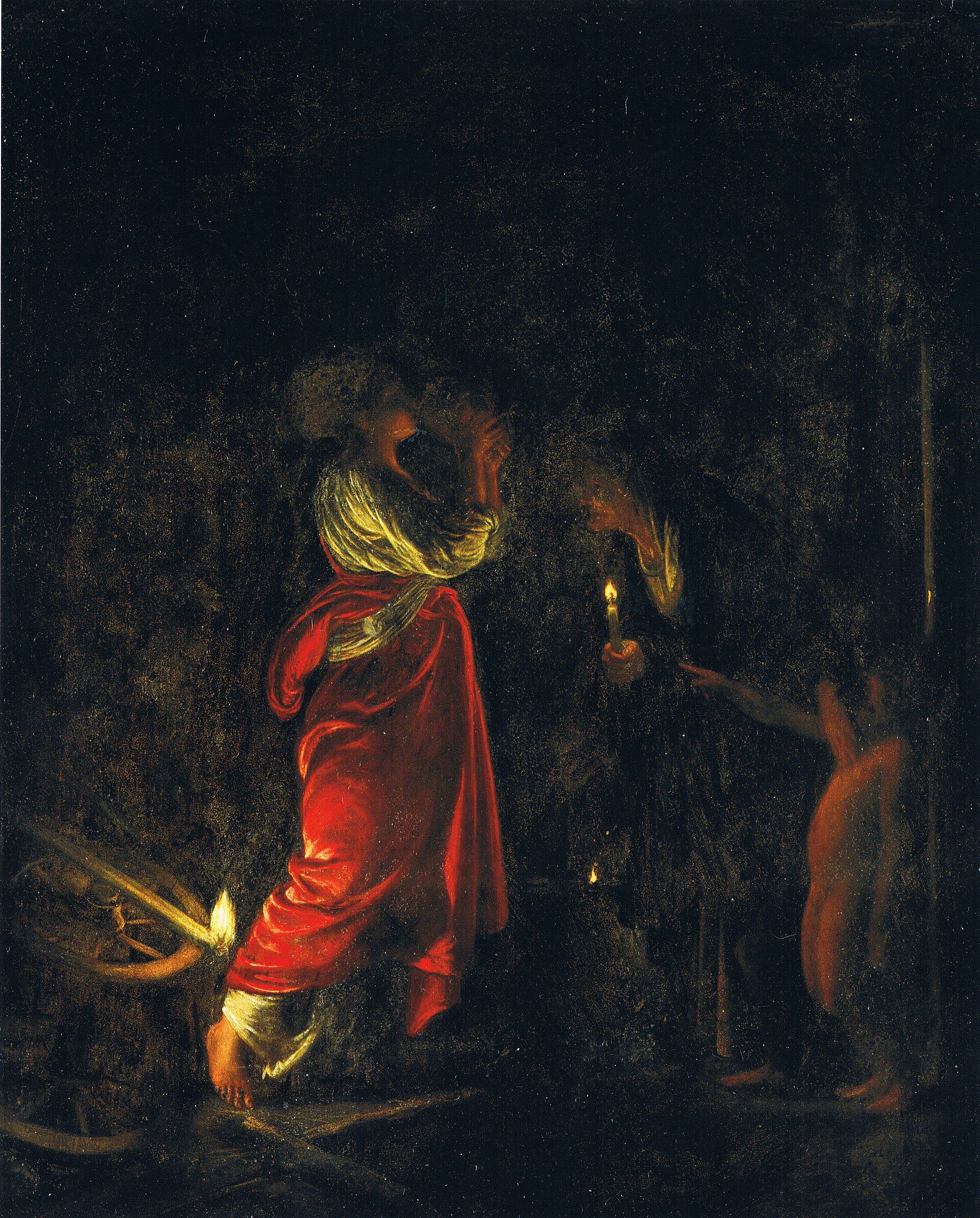
Ceres's central story is the loss and recovery of her daughter Proserpina, carried off to the underworld. In grief the goddess withdraws her gifts and the earth turns barren; her partial reunion with her daughter restores the fields. The myth dramatizes seasonal loss, maternal grief, and renewal — nature's vulnerability read through a mother's sorrow.
The gift of cultivation
Ceres was remembered as the goddess who first taught humanity to farm. In Ovid's account she “was the first who invited man to better sustenance,” turning acorn-gatherers into growers of grain. The gift of agriculture is also the gift of civilization: settled life, law, and community follow from the plow.
Grief and famine
Her withdrawal in mourning brings famine, the mythic explanation for winter's dearth. The story dramatizes the cost of divine conflict and the fragility of the harvest — though its Roman form is deeply indebted to the Greek myth of Demeter and Persephone.
Legacy & influence
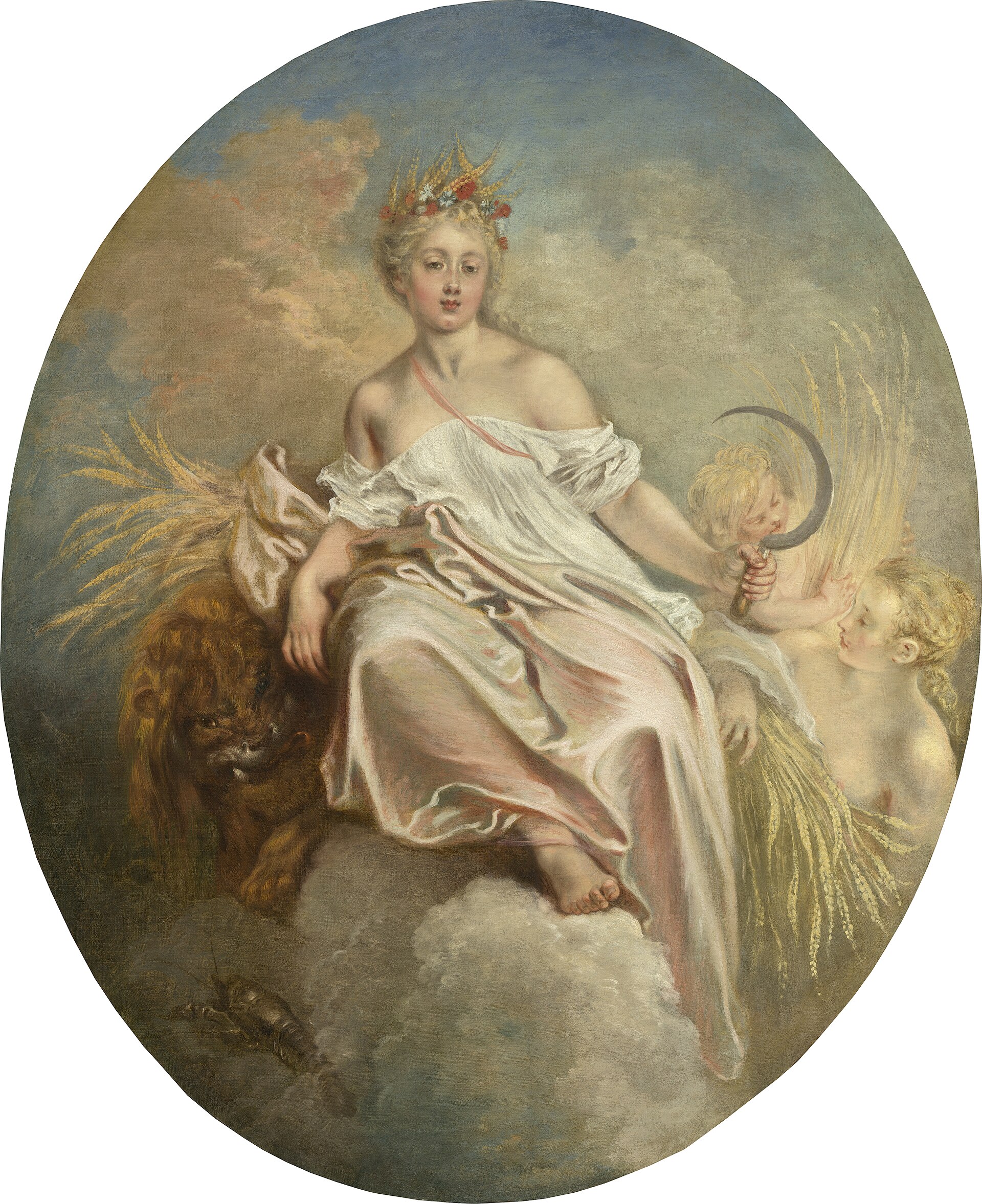
Ceres survives most obviously in language: “cereal” derives from her name. Beyond the word, agricultural imagery, maternal-grief narratives, and seasonal symbolism keep her legacy alive. Painters and sculptors returned to her wheat-crowned figure as an emblem of harvest and plenty, and personifications of Agriculture and abundance still borrow her attributes.
Symbolism
Her symbols encode her nature: the sheaf of wheat is the harvest itself, the gift of grain; the torch is her search through the dark for Proserpina; the cornucopia is abundance and plenty. Together they say what Roman religion meant by her — nourishment that is also civilization, the fertility of the earth bound to the survival of the people.
Famous public-domain depictions — click any image to view it full size.
Is Ceres the same as Demeter?
Ceres was identified with Greek Demeter and shares her core mythology of grain, agriculture, and the search for her lost daughter. But Ceres was also a distinctly Roman civic goddess: head of the plebeian Aventine Triad with Liber and Libera and the focus of the annual Cerealia festival.
What was Ceres the goddess of?
Grain, agriculture, nourishment, and the social order connected with food production. She embodied the civilizing transition from precarious subsistence toward cultivated farming.
What was the Aventine Triad?
The cult grouping of Ceres with Liber and Libera, closely associated with the plebeians of Republican Rome. Ceres was its central figure, and her temple served as a protector of plebeian institutions.
Where does the word “cereal” come from?
From Ceres. Agricultural imagery, maternal-grief narratives, and seasonal symbolism all preserve her legacy in modern language and art.
 Michael Paycer