Death, sleep, and overlapping names
The Roman underworld was not governed by a single tidy god. Instead Roman religion used a cluster of overlapping names — Dis Pater, Orcus, and Pluto — that shade into one another without ever becoming perfect synonyms in every text or period. Alongside them stand more practical or more poetic powers: Libitina, tied to the real business of funerals; Mors, death personified; and Somnus and Nox, sleep and night, who belong mostly to literature and cosmology. This page treats them as a family precisely because their edges blur.
An honest evidence note is essential here, because this is thin ground. Several of these figures survive chiefly as poetic personifications rather than as major state cults, and modern editors' capitalization can make a passing Latin abstraction look like a fully individualized deity. Grades run from B (Dis Pater) down through B/C (Orcus, Mors, Libitina) to B/D (Somnus, Nox), where the material is largely literary. Where the genealogies and stories are Greek inheritances, this page says so.
Gods and powers of the underworld
Dis Pater
Dis Pater, the “Rich Father,” was a Roman deity of the underworld and of subterranean wealth — a natural pairing, since the earth holds precious metals, seeds, and the dead all at once. He became identified with Greek Hades/Pluto, but his Roman name and cultic associations have their own history. Caesar famously reported that the Gauls claimed descent from Dis Pater, though this is Roman ethnographic testimony and may reflect interpretatio Romana — the translation of a foreign god into Roman terms — rather than an unfiltered native Celtic belief. No canonical first-person speech defines his cult; literary and antiquarian testimony carries the weight. His function is rule over the dead and subterranean riches and a share in Roman underworld ritual. His overlap with Pluto makes precise distinctions difficult, which is itself the point. He matters today in comparative religion, Roman funerary studies, and later underworld imagery. Evidence: B.
Orcus
Orcus was an underworld power associated with the dead and with punishment — especially, in some traditions, the punishment of oath-breakers. The name could denote a god, the underworld itself, or a punishing realm, and it sits at the darker, punitive end of Roman underworld language, overlapping with Pluto and Dis Pater without being perfectly identical to either. Latin poets use Orcus as a poetic name for death or the underworld; no unified first-person theology survives. His functions are punishment, death, oath-sanction, and the feared inevitability of the grave. His personality is unstable across sources — a genuine limitation, not a detail to paper over. His afterlife is curious: the name influenced literary underworld imagery and, indirectly through later tradition, monster-names such as “orc,” though the exact etymological pathway is debated. Evidence: B/C.
Mors
Mors is the Roman personification of death, corresponding broadly to Greek Thanatos — though in Latin mors can simply mean “death” rather than a fully individualized goddess. Death personified let poets dramatize mortality, but Mors had far less independent civic cult than the major gods. No secure canonical divine speech defines her, and Latin poetry's countless invocations of mors are often personification rather than evidence of formal worship. The function is the embodiment of death's inevitability. The boundary between poetic abstraction and deity is especially hard here: capitalization in modern editions can falsely imply a fixed personhood that the Latin manuscripts did not mark the same way. Her legacy is vast in language and art — memento mori, “mortal,” “mortality,” and the whole tradition of personified Death. Evidence: B/C.
Libitina
Libitina was associated with funerals, burial, and undertakers, and Roman tradition connected her grove or temple with the registration of deaths and the supply of funeral equipment. She represents death not as a mythic event but as a civic and practical institution — the paperwork and logistics of mortality. No secure first-person quotation survives; antiquarian testimony and actual Roman funeral practice are the key evidence. Her role was to oversee funerary activity and the practical transition from death to burial. Her relationship to Venus Libitina and the origin of her name are debated, and the surviving evidence does not support an elaborate personal mythology. She is valuable chiefly for understanding Rome's funeral economy and its administrative relationship with death. Evidence: B/C.
Sleep and night
Somnus
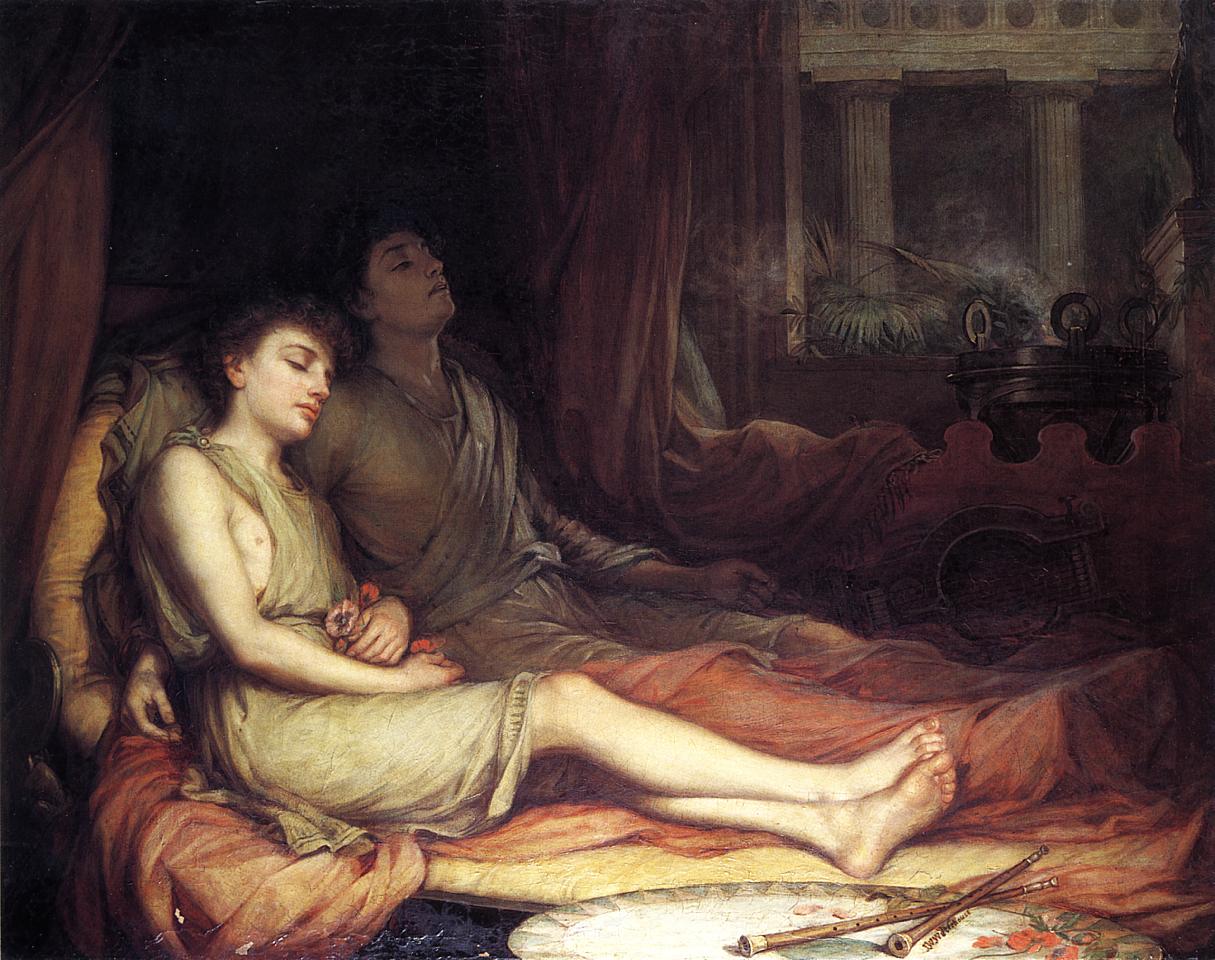
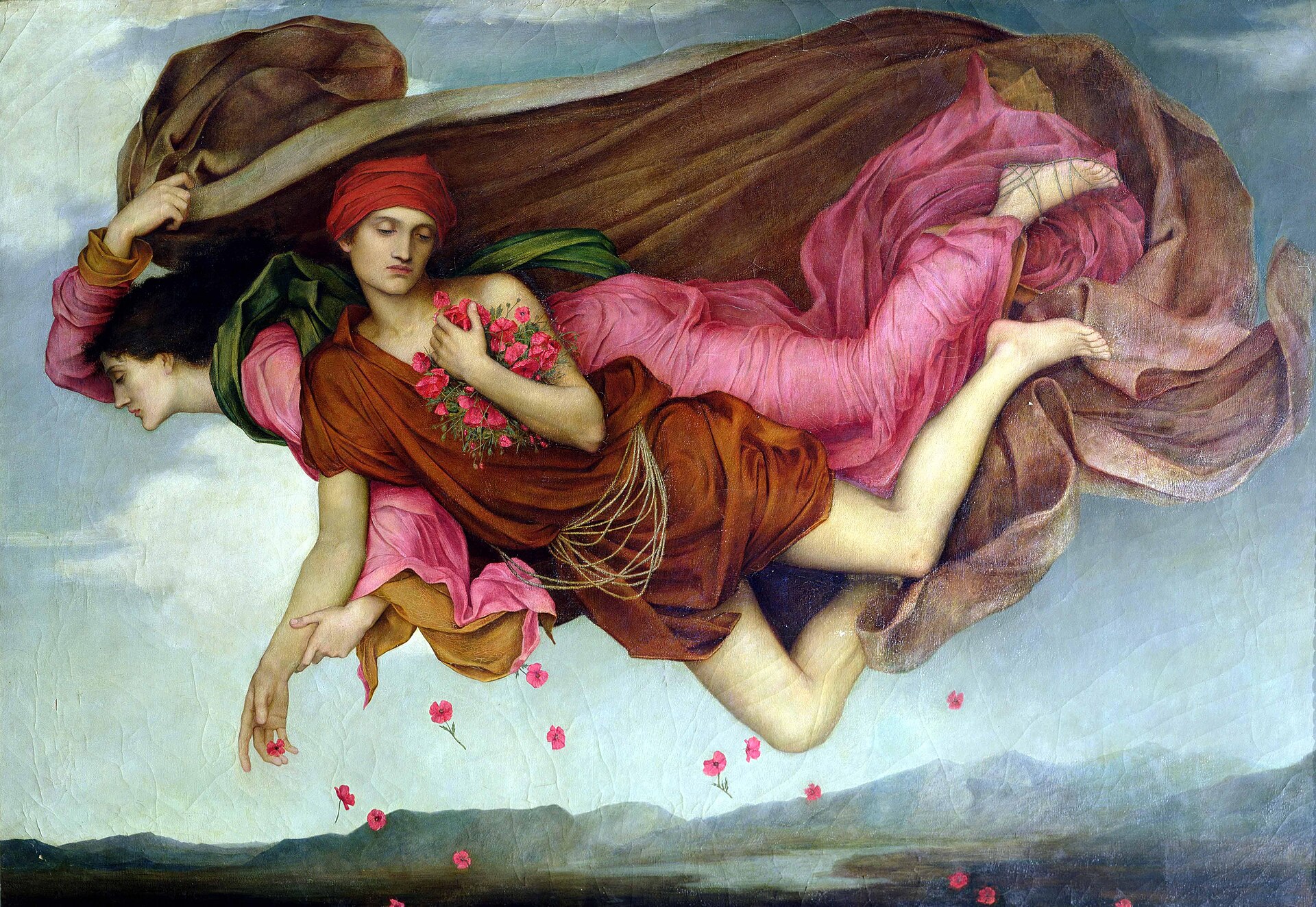
Somnus was the Roman personification and god of sleep, equivalent to Greek Hypnos; poets located him in a remote, silent dwelling and connected him with dreams. Sleep could be a natural process, a divine power, a temporary likeness of death, or a channel for dreams and messages — a rich cluster of meanings. Ovid's Metamorphoses 11 gives the famous description of the cavern and house of Sleep, where no cock, dog, or noisy creature disturbs the silence. His domain is sleep, rest, dream-mediation, and the poetic suspension of consciousness. Somnus is chiefly literary in the surviving Roman evidence, and dream experiences themselves were interpreted in competing ways, from divine message to natural psychology. His name survives in “somnolent,” “insomnia,” and “somnambulism.” Evidence: B/D.
Nox
Nox was the Roman personification of Night, corresponding to Greek Nyx, and she appears primarily in poetry, cosmology, genealogy and personification rather than as one of Rome's central civic cults. Night can be primordial darkness, a temporal cycle, the mother of other powers, or simply a poetic personification. Roman poets repeatedly invoke Nox as the enveloping night, but there is no single doctrinal speech that defines her. Her range covers night, darkness, cosmic rhythm, sleep, dreams, secrecy and dread. Much of the genealogical mythology attached to her is Greek-derived, and evidence for a major independent Roman cult of Night is limited — a point worth stating rather than inflating. Her legacy runs through “nocturnal,” “nocturne,” astronomy, art, and the enduring female personification of night. Evidence: B/D.
Famous public-domain depictions — click any image to view it full size.
Are Dis Pater, Orcus, and Pluto the same god?
They overlap heavily — all are Roman powers of the underworld and the dead — but they are not exact synonyms in every text or period. Dis Pater is the “Rich Father” of subterranean wealth and the dead, Orcus is the darker, punitive power associated with death and the punishment of oath-breakers, and Pluto is the sovereign of the dead most fully identified with Greek Hades. Roman writers used the names in overlapping ways without treating them as perfectly interchangeable.
Did the Romans worship death itself?
Mostly as personification rather than a major cult. Mors, death personified, is largely a poetic figure with little independent civic cult. But Libitina had a real, practical role tied to funerals, undertakers and the registration of deaths, and Dis Pater received underworld ritual — so death entered Roman religion more as funerary practice and personification than as a great state cult.
Who was the Roman god of sleep?
Somnus, equivalent to Greek Hypnos. Poets located him in a remote, silent dwelling and connected him with dreams; Ovid's Metamorphoses 11 gives the famous description of the cavern and house of Sleep, where no cock, dog or noisy creature disturbs the silence. Somnus is chiefly a literary figure in the surviving Roman evidence.
Is Nox a major Roman goddess?
Nox, the personification of Night (Greek Nyx), appears mainly in poetry, cosmology and genealogy rather than as one of Rome's central civic cults. Much of her genealogical mythology is Greek-derived, and evidence for a major independent Roman cult of Night is limited.
 Michael Paycer