Who is Proserpina?
Proserpina was the Roman counterpart of Greek Persephone: daughter of Ceres and queen of the underworld. Her story became one of antiquity's most powerful myths — abduction, a mother's grief, seasonal return, and divided belonging. She is the goddess who lives in two worlds at once, and who therefore stands at the seam where life meets death.
That doubleness is her meaning. Carried below by Pluto and returned above to her mother for part of the year, Proserpina embodies both loss and renewal — the grief of the barren season and the promise of its ending.
Origins & history
Proserpina's Roman identity is inseparable from her mother's. Ceres, the great goddess of grain, and Proserpina together carry the Roman form of the Demeter-Persephone myth, absorbed from Greek tradition through Latin poetry — above all Ovid's Fasti and Metamorphoses. In its Roman telling the story keeps its Greek shape while becoming part of Rome's own seasonal and agricultural imagination.
The myth's Roman form is deeply indebted to Greece, and honest reading keeps that in view: much of Proserpina's biography is inherited rather than independently Italian. What is distinctive is how Rome folded the story into the cult of Ceres and into its own calendar of loss and return.
Cult & worship
Proserpina's cult follows the Ceres–Proserpina seasonal cycle: the mother's grief and search, the daughter's descent, and the annual return that maps onto the barren and fruitful seasons. In the wider mystery traditions surrounding the Persephone-Proserpina complex, her descent and return could support a hope concerning death and renewal — a sense that mortality was not simply the end. That hope should be stated carefully: precise doctrines varied, secrecy limits what can be known, and it would be wrong to read a single fixed creed into the mysteries.
Greek equivalent
Proserpina is the Roman name for Persephone, and the two are essentially the same figure seen through Greek and Roman eyes. The abduction, the pomegranate, the grieving mother, and the divided year all belong to the shared myth. For the Greek side of the tradition, see the Greek mythology overview; for the mother whose cult carries Proserpina in Rome, see Ceres. Reading the Roman and Greek forms together shows how a single myth could belong to two religious worlds at once.
Famous myths & stories
The abduction and the search
Ovid's Fasti (Book 4) narrates the heart of the myth: Proserpina is seized by Pluto and carried into the underworld, and her mother Ceres ranges the earth in desperate grief searching for her. A settlement is reached by which Proserpina divides her time between the upper and lower worlds — the compromise that, in the myth, sets the rhythm of the seasons. Ceres' withdrawal in mourning brings famine; her daughter's return brings life back to the fields.
The divided year
Proserpina's time below coincides with the barren season and her return with renewal. She is thus a goddess of the threshold: neither wholly of the living world nor wholly of the dead, but the pivot on which the two turn into each other. The divided year is her defining condition.
Constrained agency
In the most famous versions Proserpina's power is real but bounded. She is abducted and made part of a divine settlement rather than choosing freely, and later retellings sometimes romanticize the story beyond what the ancient sources justify. Held honestly, the myth is as much about constraint and grief as it is about queenship.
Legacy & influence
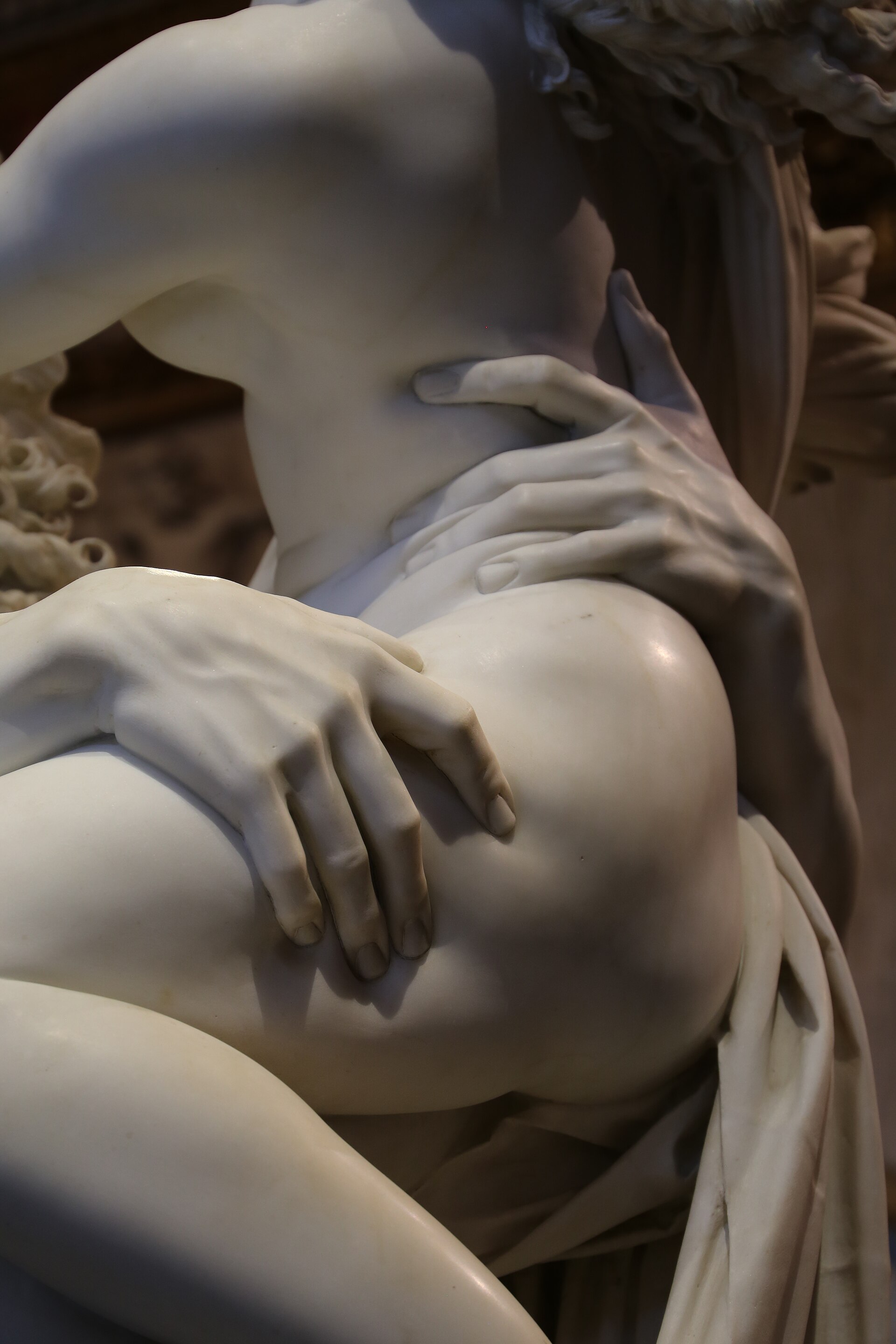
Proserpina has never left the Western imagination. Poetry, opera, and visual art return again and again to the abduction and the grieving mother; Bernini's sculpture of the seizure is among the most famous images in European art. In modern culture she anchors feminist reinterpretation, depth psychology, and countless retellings of the Persephone-and-Hades story. Wherever a narrative turns on a young woman between two worlds, or on the seasons read as loss and return, Proserpina is close by.
Symbolism
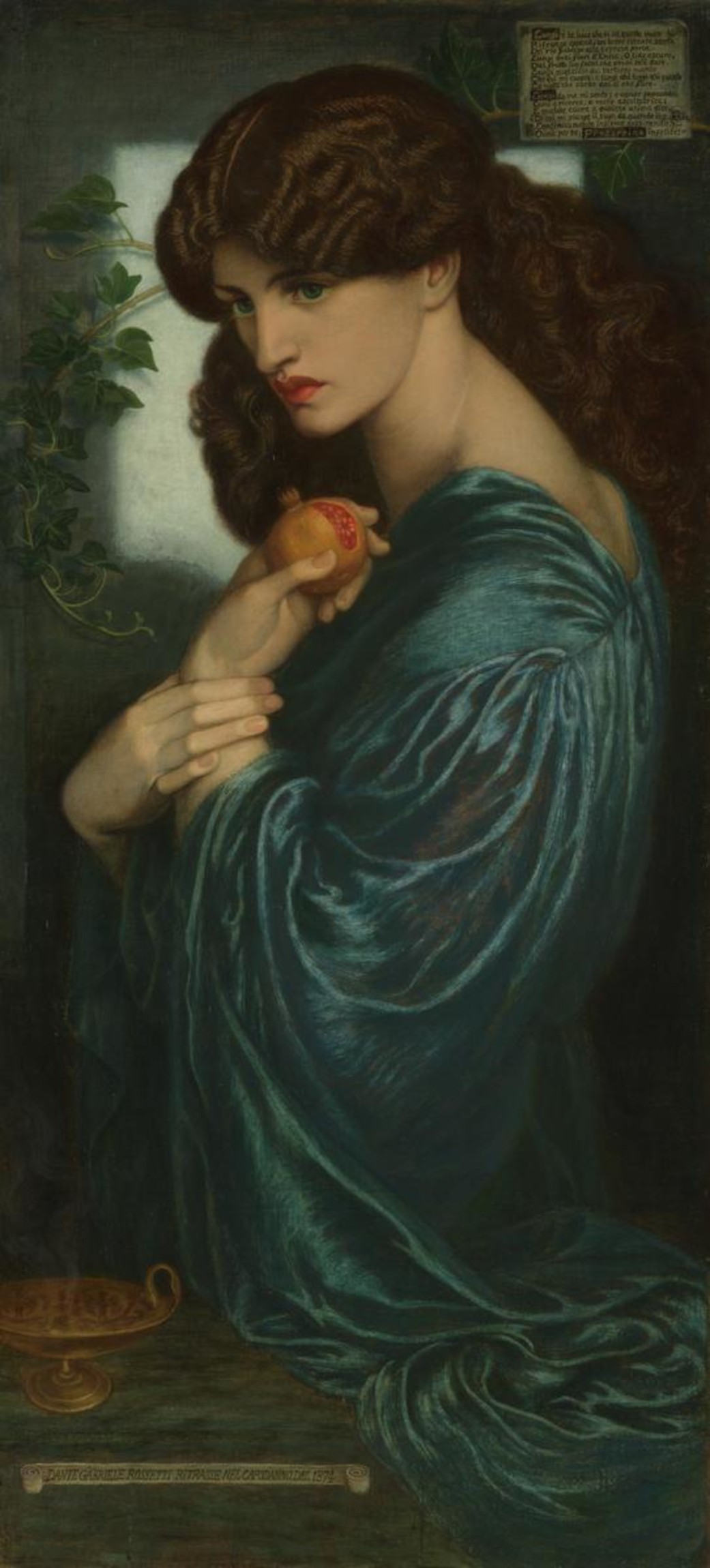
Her attributes hold her two worlds together: the pomegranate is the fruit of the underworld that binds her to the realm below; the grain ties her to her mother and the harvest above; the torch recalls Ceres' night search for her lost daughter; and spring flowers mark her return and the renewal of the year. Together they say what the myth means — that loss and life are bound into a single turning circle.
Famous public-domain depictions — click any image to view it full size.
Is Proserpina the same as Persephone?
Proserpina is the Roman counterpart of Greek Persephone, and the two share the same myth of abduction, maternal grief, and seasonal return. Much of Proserpina's story is inherited from the Greek Persephone tradition through Latin poetry, above all Ovid's Fasti and Metamorphoses.
What was Proserpina the goddess of?
Queen of the underworld and daughter of Ceres. She bridges life and death: her descent and return frame the seasonal cycle of loss and renewal, and she stands at the center of Ceres' myth and of later art and mystery tradition.
What is the myth of Proserpina?
She is abducted by Pluto and carried into the underworld to be his queen. Her mother Ceres searches the earth in desperate grief, and a divine settlement divides Proserpina's year between the upper world and the lower — the pattern that, in the myth, explains the turning of the seasons. Ovid narrates it in Fasti 4.
Why does Proserpina spend part of the year in the underworld?
Because of the compromise that ends Ceres' search: Proserpina divides her time between the upper and lower worlds. Her time below coincides with the barren season and her return with renewal, so the myth dramatizes seasonal loss and rebirth — though her own agency in the settlement is constrained.
 Michael Paycer