The Underworld · The Dead · Subterranean Wealth
Pluto, Roman God of the Underworld
Plouton — “the rich one.” Sovereign of the dead and of the wealth beneath the earth, overlapping Dis Pater and Orcus — but never a Christian devil.
 Michael Paycer
Plouton — “the rich one.” Sovereign of the dead and of the wealth beneath the earth, overlapping Dis Pater and Orcus — but never a Christian devil.
Michael PaycerRole
The underworld, the dead, buried wealth
Symbols
Bident, key, cornucopia, Cerberus
Cult
Chthonic; overlaps Dis Pater & Orcus
Greek equivalent
Pluto was the Roman god of the underworld — sovereign of the dead and of the wealth hidden beneath the earth. His name descends through Greek Plouton, “the rich one,” and he was heavily identified with Greek Hades and with the native Roman Dis Pater, the “Rich Father.” The emphasis is telling: the god of death is also the god of buried riches, metals, and the seed that returns from the ground.
Crucially, Pluto is not a Satan-like embodiment of evil. He is a ruler, not a tempter. Roman religion did not sharply map him onto later Christian demonology, and reading him through that lens misses what he actually was: the sovereign of an irreversible boundary.
Pluto's Roman identity is layered. The name and much of the narrative come through Greek Plouton, while older Italian religion already had powers of death and the underworld — above all Dis Pater and the grimmer Orcus. These names overlap heavily in Roman usage, but they are not always exact synonyms in every period: Dis Pater stresses subterranean riches, Orcus leans toward death and punishment, and Pluto carries the Greek literary inheritance. A Roman could invoke “the rich one” below without committing to a single fixed theology of the dead.
That layering is characteristic of Roman religion, which absorbed Greek myth through Latin poetry while keeping native cult names and functions alive alongside it.
Pluto belongs to the chthonic, or underworld, side of Roman religion rather than to the bright civic cult of the Capitoline. His worship overlaps with that of Dis Pater and Orcus, and with the seasonal cult of Ceres and Proserpina, whose annual loss and return frame the underworld as part of the agricultural year. Because much of this cult was tied to the dead and to mystery traditions, the surviving evidence is thinner and more literary than for a god like Jupiter — a reminder that Roman religion was as much ritual and silence as it was story.
Pluto was identified with Greek Hades, and the two share the role of sovereign of the dead. Much of Pluto's narrative — above all the abduction of Proserpina — is inherited from the Greek Hades-Persephone myth through Latin poetry. But the Roman name foregrounds wealth (Plouton, “the rich one”) in a way that the grim Greek Hades does not, and in Rome that identity blurs into Dis Pater and Orcus. Reading Pluto and Hades side by side shows how Rome could adopt a Greek god and quietly recolor him.
Pluto's central myth is the seizure of Proserpina, daughter of Ceres, whom he carries down into the underworld to be his queen. Ovid retells it in the Fasti (Book 4) and the Metamorphoses: Ceres searches the earth in grief, and a compromise divides Proserpina's year between the upper and lower worlds. The story was already morally charged in antiquity — a forced marriage and an abduction — and it makes Pluto the fixed pole around which the seasons turn.
As Plouton, “the rich one,” Pluto rules not only the dead but the wealth of the earth: metals, minerals, and the buried seed. Death and riches meet in a single god, so that the ground that receives the dead is also the ground that yields the harvest.
More than a character in stories, Pluto embodies the one-way frontier of mortality. To go down to his realm is, in the normal order of things, not to return — which is exactly what makes the Proserpina settlement, and the mystery-cult hope built around it, so charged.
Pluto endures in language and imagination. The dwarf planet Pluto carries his name, chosen for the dark, distant edge of the solar system; “plutocracy” preserves the older sense of wealth. Underworld imagery, opera, literature, depth psychology, and popular culture all keep returning to the sovereign of the dead. Whenever a story sends a hero down into a shadowed kingdom to bargain for a soul, it is walking into Pluto's realm.
His attributes encode his double nature: the bident is his two-pronged emblem of underworld rule; the key locks a realm from which there is no easy return; the cornucopia marks him as “the rich one,” source of the earth's buried abundance; and Cerberus, the guardian hound, watches the threshold. Together they say what the Romans meant by him — death that is also wealth, and a boundary that is also a throne.
Famous public-domain depictions — click any image to view it full size.
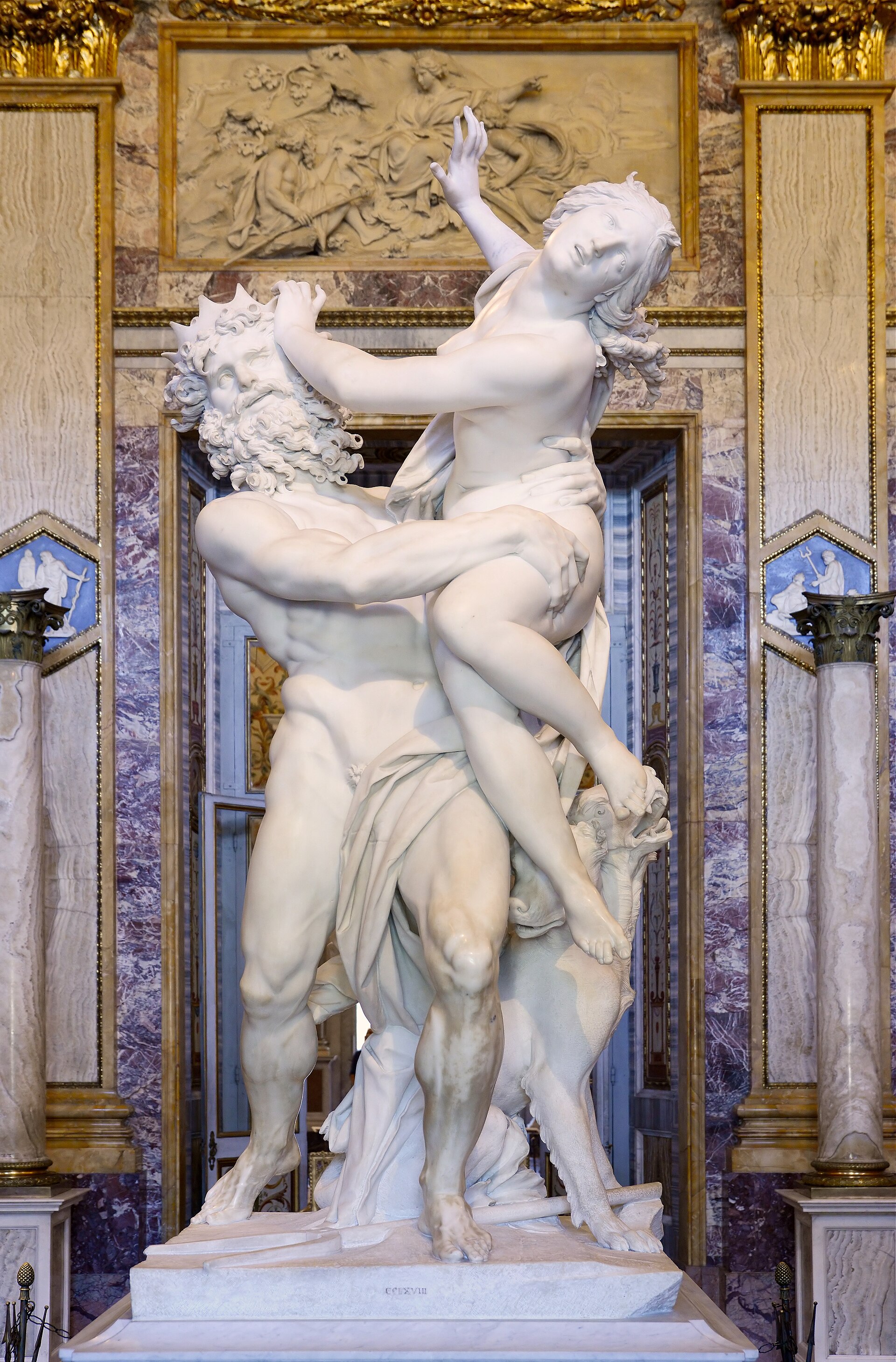
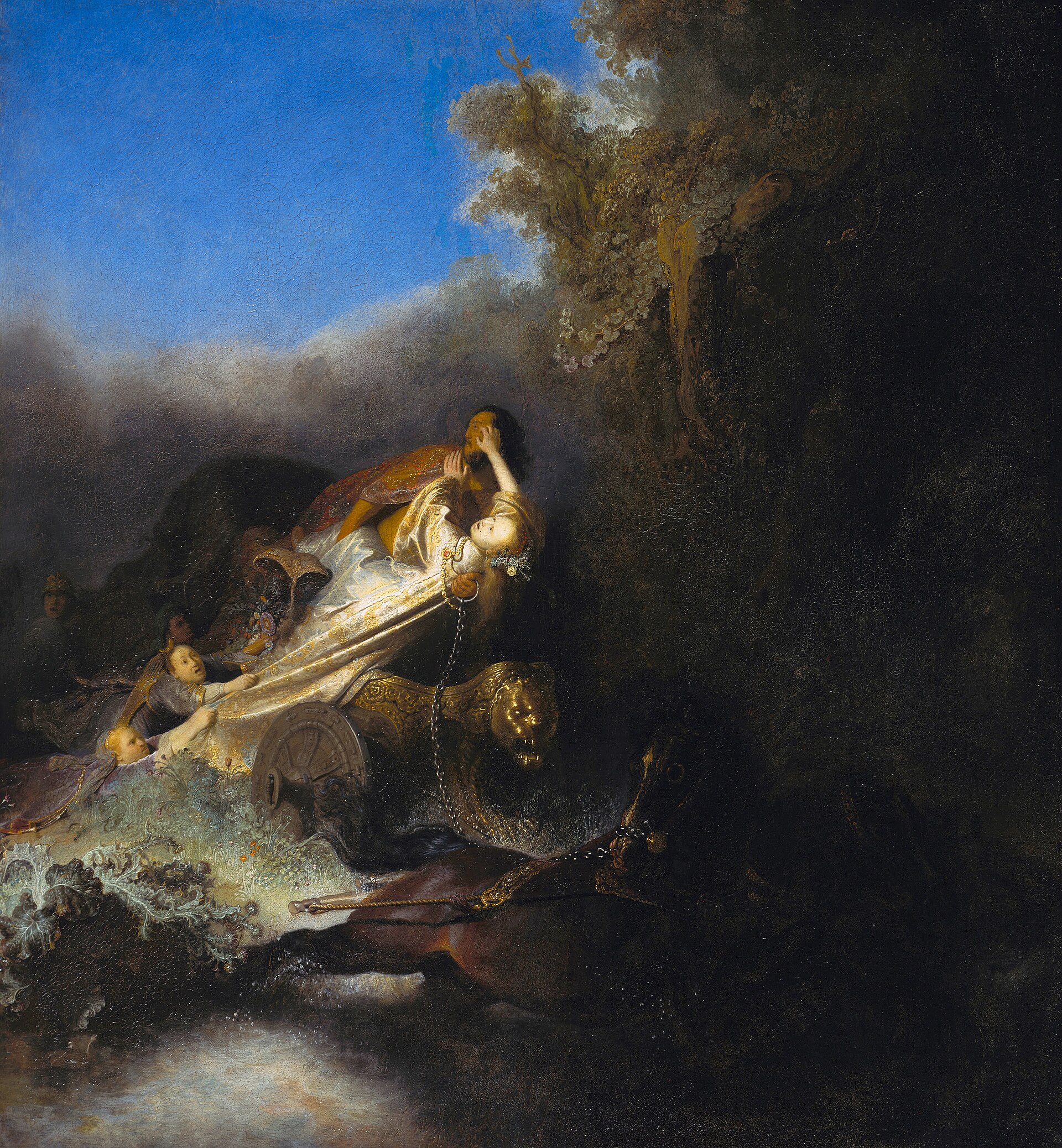
No single secure Roman quotation defines Pluto: unlike a creed, his identity is carried in narrative — above all Ovid's telling of the Proserpina abduction (Fasti 4, Metamorphoses). That is itself the point. Pluto shows a god who is real in ritual and story without ever being reduced to a doctrine, and whose Roman name (“the rich one”) quietly reframes the Greek Hades as lord of buried wealth rather than mere terror.
“The rich one” — sovereign of the dead and of subterranean wealth, overlapping Dis Pater and Orcus.
Grim king of the Greek underworld — lord of the dead, but without the Roman emphasis on riches or the blur into native death-gods.
Pluto was heavily identified with Greek Hades and shares his role as sovereign of the dead. But the name comes through Greek Plouton, “the rich one,” emphasizing the wealth beneath the earth, and in Rome he overlaps with the native Dis Pater and with Orcus — figures that are not always exact synonyms in every period.
No. Pluto is the sovereign of the dead and of subterranean wealth, not an embodiment of evil. Roman religion did not map him onto later Christian demonology; reading him as a Satan figure is an anachronism.
The underworld and the dead, and — as “the rich one” — the wealth of metals, seed, and buried treasure beneath the earth. He embodies the irreversible boundary of mortality and takes part in the seasonal cycle of Proserpina.
All three are Roman names for powers of death and the underworld, and they overlap heavily. Pluto (from Greek Plouton) stresses subterranean wealth, Dis Pater is the “Rich Father,” and Orcus is a grimmer god of death and punishment. Ancient usage blurs them, but they are not exact synonyms in every period.
When I am not reading Virgil or Cicero, I tune databases, design high-availability systems, and run cloud migrations.