From desire to dynasty
The Roman gods of love and marriage span an unusually wide range — from the raw force of desire to the machinery of elite politics. At one end stand Cupid, the personified power of longing; Suadela, the goddess of persuasion; Hymen, the spirit of the wedding hymn; and Voluptas, pleasure itself. At the other stands Venus in her cult titles, remade by Julius Caesar and Pompey into a badge of dynastic legitimacy and battlefield victory. Love, in Rome, was never only a private feeling; it was also ancestry, alliance, and power.
An honest note on evidence: these figures are unevenly documented. Cupid and Voluptas are richly present in Latin poetry — especially the Cupid and Psyche tale in Apuleius — but as personifications more than as recipients of major independent cult. Suadela and, to a lesser degree, Hymen survive chiefly as literary and ritual personifications with thin cult records. Only the two Venus cult titles are strongly attested, and there through architecture, coinage, and politics rather than a body of myth. Roman marriage itself, it is worth remembering, was structured by status, patriarchy, and legal inequality — so these gods illuminate an institution quite unlike the modern one.
Desire, persuasion, and the wedding
Cupid
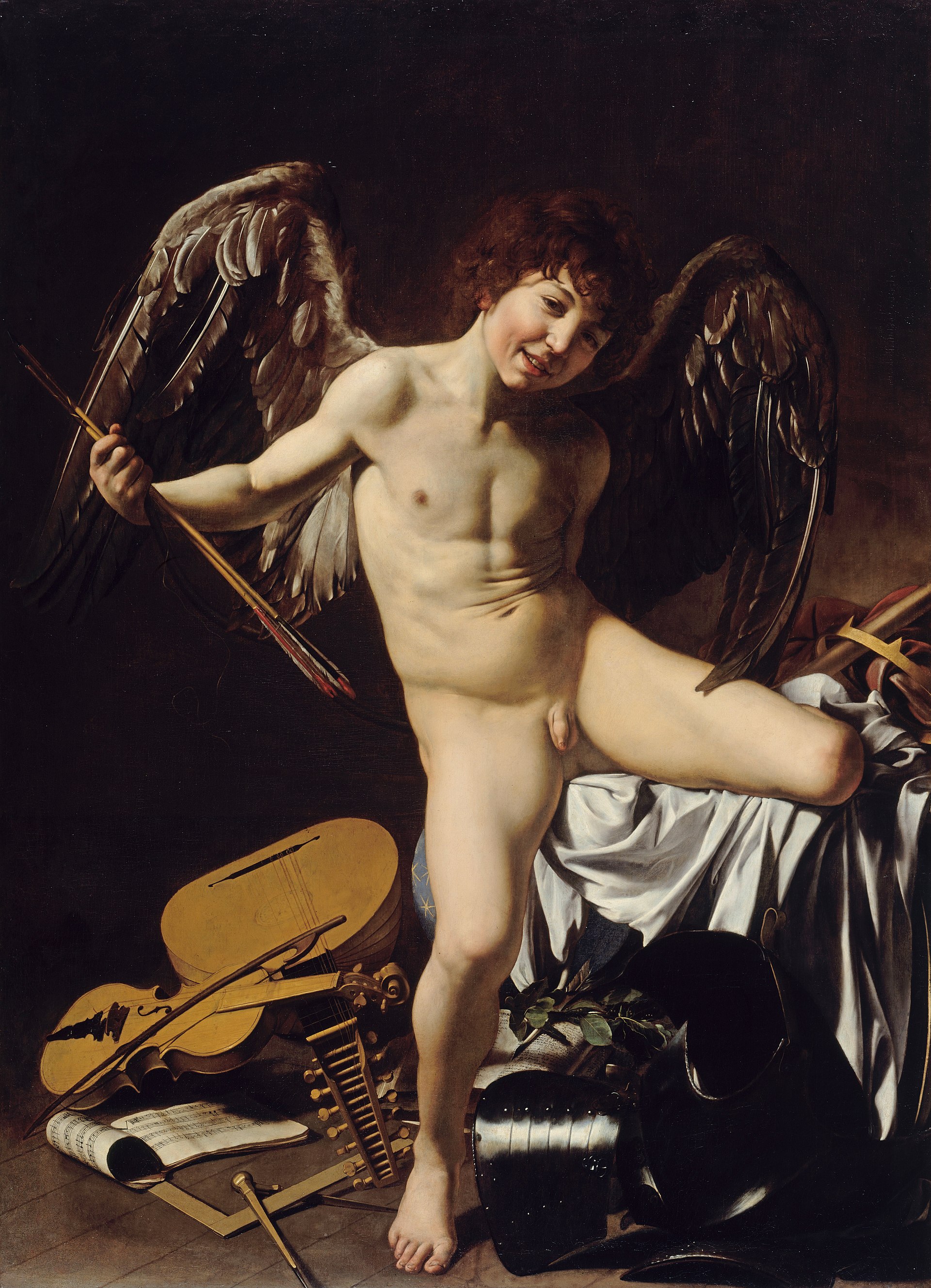
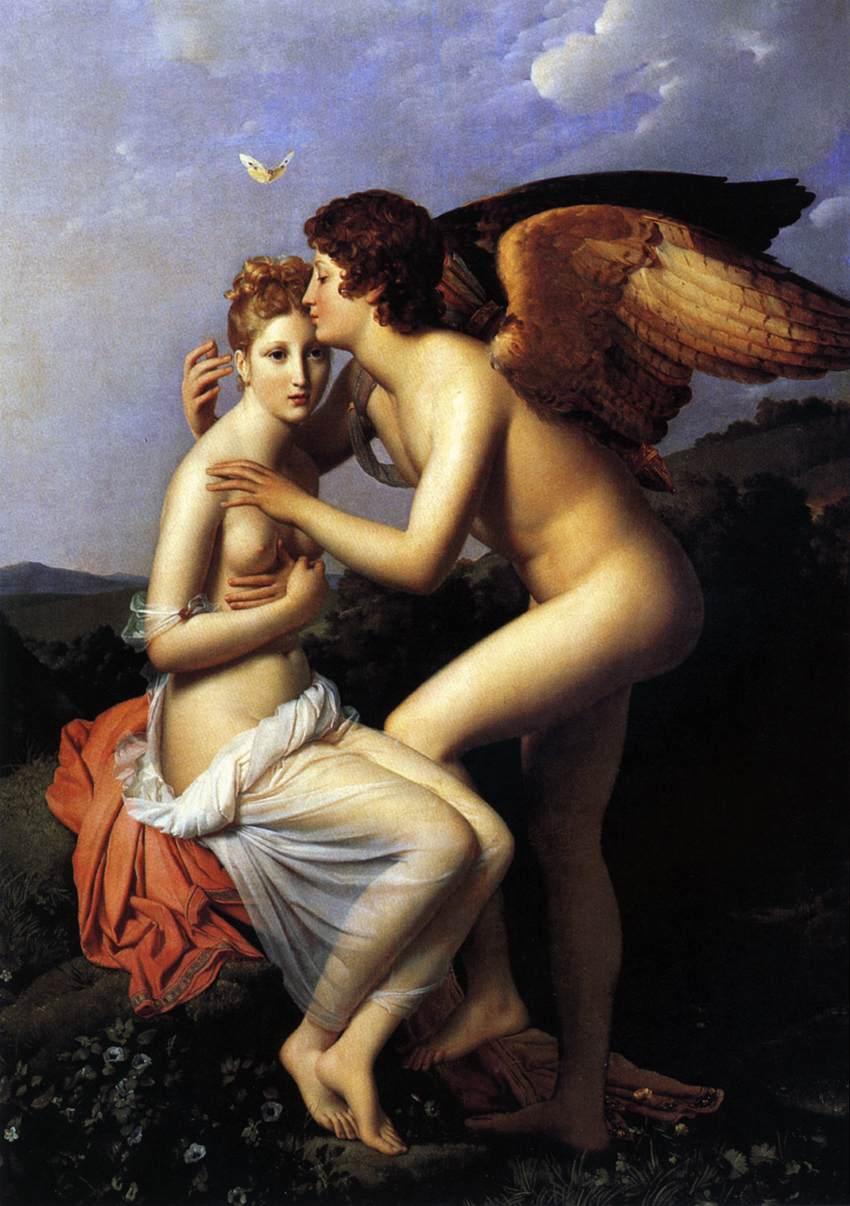
Latin Cupido, “desire” — the Roman counterpart of Greek Eros, and, depending on period and genre, a primordial force, a mischievous winged boy, or the son of Venus. Cupid personifies desire's irrational, creative, and destabilizing power: philosophers could analyze longing ethically, but poets embodied it as an armed child whose arrows overwhelm reason. In Virgil's Aeneid, Venus uses Cupid to inflame Dido's love for Aeneas, with catastrophic results — a reminder that desire is morally ambivalent. His afterlife is everywhere: the cherubs of popular art, Valentine imagery, the Cupid and Psyche tradition, opera, and psychology. Evidence: A/B.
Hymen
Hymen, or Hymenaeus, was the divine personification of marriage and the wedding hymn, inherited largely from Greek tradition but woven into Roman literature and ceremony. He was more a literary and ritual figure than a major independent state god, invoked in the traditional wedding refrain rather than served by a great cult. His name has a curious linguistic afterlife in the anatomical term “hymen” — connected to the same Greek word, though that link should not be used to read ancient marriage ideology into modern anatomy. Evidence: B/C.
Suadela
The Roman personification of persuasion, equivalent to Greek Peitho, and especially relevant to rhetoric, seduction, and social influence — some of the central forces of Roman public life. She embodies the power of persuasive speech, which can serve truth or manipulation equally well. Her independent cult is poorly documented; she survives mainly as an allegorical figure and in the Latin root that gives English “suasion” and “persuade.” Evidence: C.
Voluptas
The personification of pleasure. In Apuleius's Latin tale of Cupid and Psyche, Voluptas is the daughter born from their union — the reconciliation of love and soul made flesh. The word voluptas carried real philosophical weight, because Epicurean ethics made pleasure central to the good life; but Epicurean pleasure meant freedom from bodily pain and mental disturbance, not endless indulgence, so the goddess should not be flattened into the doctrine. As a cult figure she is slight; as a literary and philosophical emblem she runs through art, allegory, and debates about pleasure. Evidence: B/C.
The political Venus
Venus Genetrix
Venus “the Ancestress.” Julius Caesar claimed descent through the Julian family from Aeneas's son Iulus and therefore from Venus herself, and in 46 BCE he dedicated a temple to Venus Genetrix in his new forum. Here religion, ancestry, and political legitimacy merge: the goddess of love becomes the divine mother of a ruling line. Descent from a goddess is mythic ideology, not genealogy, but as Augustan and imperial art shows, the claim of sacred ancestry proved extraordinarily durable. Evidence: A.
Venus Victrix
Venus “the Victorious,” who linked beauty and desire to military success. Pompey dedicated a temple to her atop his great theater complex in 55 BCE, staking his prestige on her patronage. She shows how modular Roman divine personalities were: the same Venus could be ancestress, lover, fertility power, or giver of victory. She also shows the limit of such propaganda — Pompey's own eventual defeat and death proved that a cult title guaranteed nothing on the battlefield. Evidence: A/B.
Famous public-domain depictions — click any image to view it full size.
Roman religion angleThe modular Venus is the lesson here. The same goddess could be ancestress, lover, fertility power, and giver of victory, and ambitious men reached into that toolkit as needed — Caesar for a divine bloodline, Pompey for a victory patron. In Rome a cult title was not only devotion; it could be a political instrument.
Is Cupid the same as the Greek Eros?
Yes. Cupid (Latin Cupido, “desire”) was the Roman counterpart of Greek Eros. Depending on the period and genre he could be a primordial cosmic force, a mischievous winged boy, or the son of Venus. He personifies desire's irrational, creative, and destabilizing power.
What were Venus Genetrix and Venus Victrix?
They were political cult titles of Venus. Venus Genetrix (“the Ancestress”) was promoted by Julius Caesar, who claimed descent from Venus through Aeneas and dedicated her temple in his forum in 46 BCE. Venus Victrix (“the Victorious”) linked beauty and desire to military success; Pompey dedicated her temple atop his theater complex in 55 BCE.
Who was Voluptas?
Voluptas personified pleasure. In Apuleius's Latin tale of Cupid and Psyche she is the daughter born from their union. The word voluptas also carried philosophical weight because Epicurean ethics made pleasure central to the good life — though Epicurean pleasure meant freedom from pain and disturbance, not endless indulgence, so the goddess should not be equated directly with the doctrine.
Did Rome have gods of persuasion and the wedding?
Yes, mainly as personifications. Suadela personified persuasion, the Roman equivalent of Greek Peitho, important to both rhetoric and seduction. Hymen (or Hymenaeus) personified marriage and the wedding hymn. Both were more literary and ritual figures than major independent state gods.
 Michael Paycer