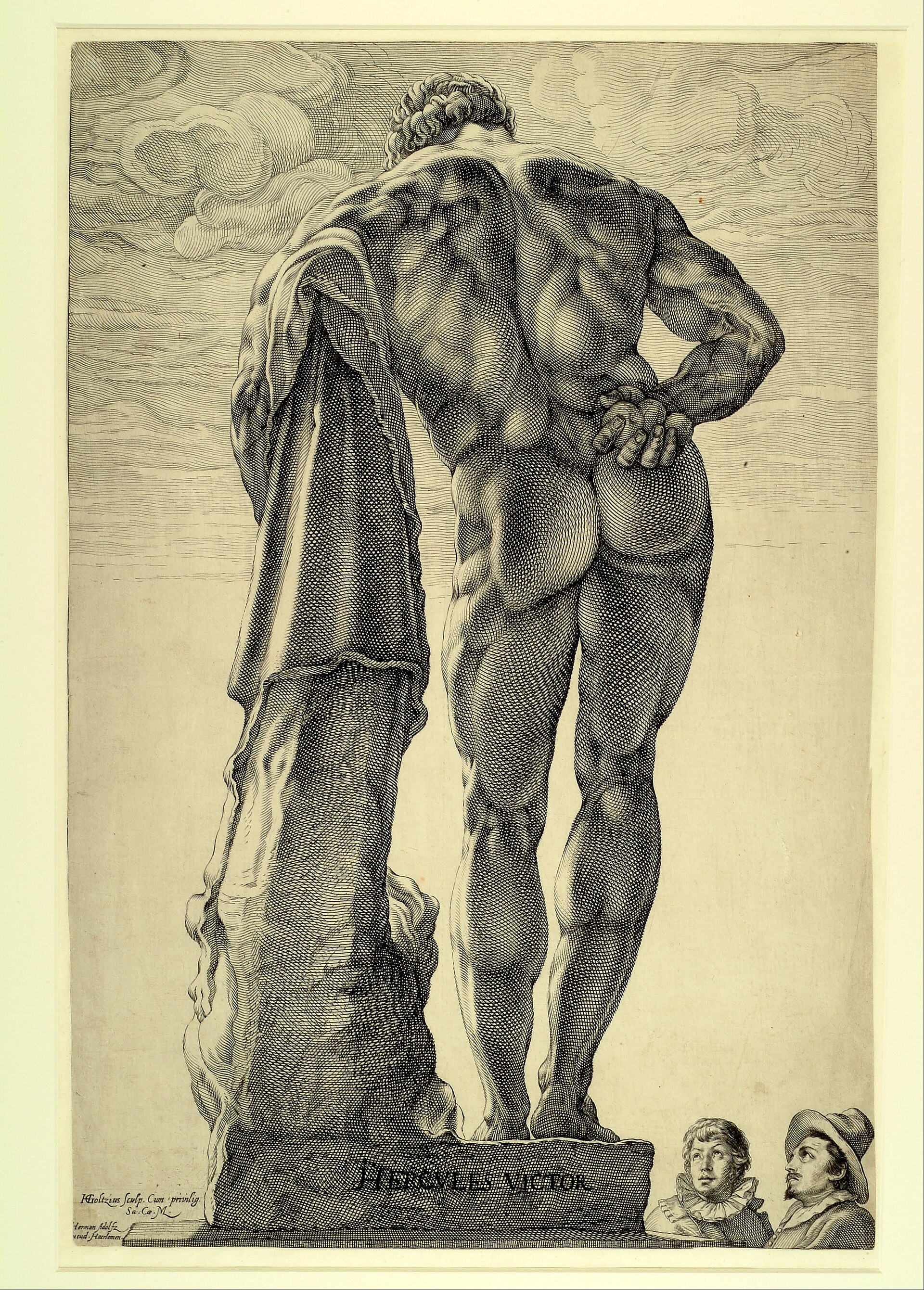
Who is Hercules?
Hercules is the Roman name for the Greek hero Heracles, and by the historical period he was deeply integrated into Roman religion. He kept the familiar biography — the Twelve Labors, the defeat of monsters, the liberation of communities — but at Rome he became something more than an imported legend: a god with his own ancient cult at the Ara Maxima in the Forum Boarium, the city's cattle market.
That is the key to the Roman Hercules. He could be hero, god, protector of traders, model of endurance, and philosophical exemplar of virtue overcoming hardship, all at once. Where Greek myth dwells on his suffering and his rage, Roman cult fixed him to a place — an altar in the heart of Rome — and to a role in the city's economic and religious life.
Origins & history
The Ara Maxima was one of the oldest sacred sites in Rome, and tradition tied it directly to Hercules's victory over the cattle-stealing monster Cacus — a myth that connected the Greek hero with the future site of the city itself. In this way Hercules was woven into Rome's landscape of origins: the hero passed through the site of Rome before Rome existed, and left behind an altar that Romans still tended centuries later.
His cult sat at the meeting point of Greek myth and Roman place. The stories were Greek, but the altar, the ritual, and the commercial associations of the Forum Boarium were Roman. A trader could vow a tithe of his profit to Hercules at the Ara Maxima while a philosopher read the same hero as a figure of moral endurance.
Cult & worship
Hercules was honored at the Ara Maxima with distinctive rites, and his cult carried a strongly civic and commercial character: he was a protector of traders and of the market that surrounded his altar. Beyond Rome's merchants, he drew the admiration of philosophers. Stoic and Cynic traditions especially prized the disciplined hero, reading his labors as a model of virtue won through toil rather than comfort. To worship Hercules was to honor endurance itself — greatness achieved by hard, sustained effort.
Greek equivalent
Hercules is simply the Roman form of Greek Heracles, and the two share the same core mythology — the Labors, the monsters, the madness, the eventual apotheosis. But the identification does not exhaust the Roman figure. Heracles is a Panhellenic hero worshipped across the Greek world; the Roman Hercules is that and the god of a specific ancient altar in Rome, bound to one city's market, memory, and moral imagination. Reading the two together shows how Rome took a Greek hero and gave him a local home.
Famous myths & stories
Hercules and Cacus
In the myth retold in Virgil's Aeneid 8, the monster Cacus steals cattle from Hercules and hides them in a cave on the future site of Rome. Hercules hunts him down and kills him, and the victory is commemorated at the Ara Maxima — binding the hero permanently to the ground on which the city would rise.
The Twelve Labors
The backbone of his legend: a sequence of near-impossible tasks — the defeat of monsters, the liberation of communities — carried out under compulsion. For Roman readers and philosophers alike, the Labors made Hercules the archetype of achievement through relentless toil.
Madness and atonement
His greatness is inseparable from catastrophe. His myths include episodes of madness, the killing of his own family, sexual excess, and violence, followed by long atonement. The tradition never lets his heroism be simple: it is bought at the price of terrible suffering.
Legacy & influence
Hercules is one of the most influential heroes in the world. He runs through Western and global art, film, philosophy, and popular culture, and his image still anchors modern ideas of physical strength and fitness. Whenever a story reaches for a figure whose muscle is matched by suffering and whose virtue is measured in labor, it is reaching for Hercules.
Symbolism
His attributes state his nature: the club is raw, sanctioned force, the plain weapon of a hero who fights with his hands; the lion skin — taken from the Nemean lion — is conquest worn as a trophy and armor; the bow is skill and reach. Together they say what the Romans meant by him: strength disciplined into virtue, power proved by what it endures.
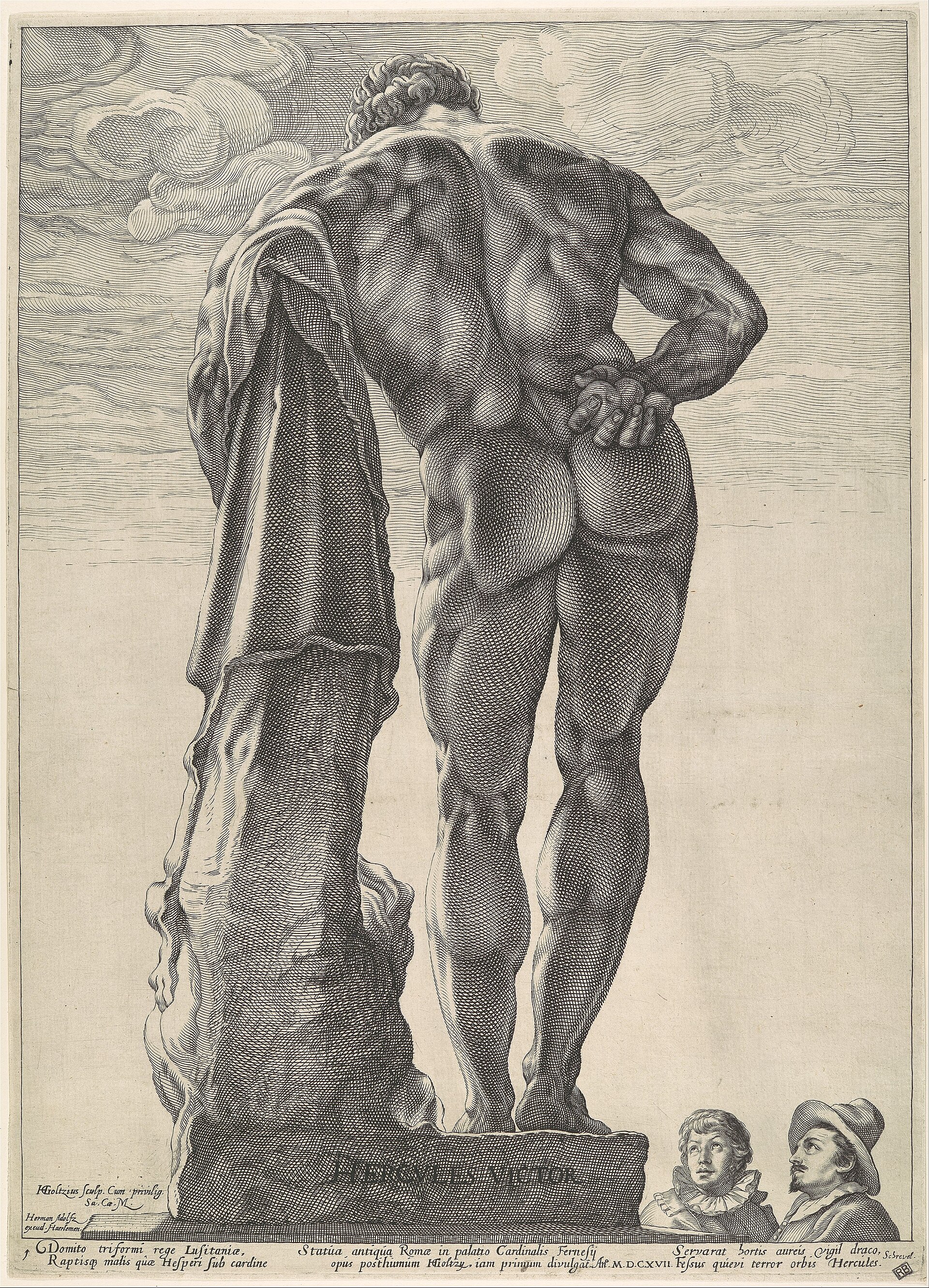
Famous public-domain depictions — click any image to view it full size.
No verbatim first-person line of Hercules is securely preserved. The key ancient text for his Roman cult is narrative rather than quotation: Virgil's Aeneid 8 tells how Hercules kills Cacus and is honored at the Ara Maxima. To avoid inventing words, no direct quotation is printed here.
 Michael Paycer