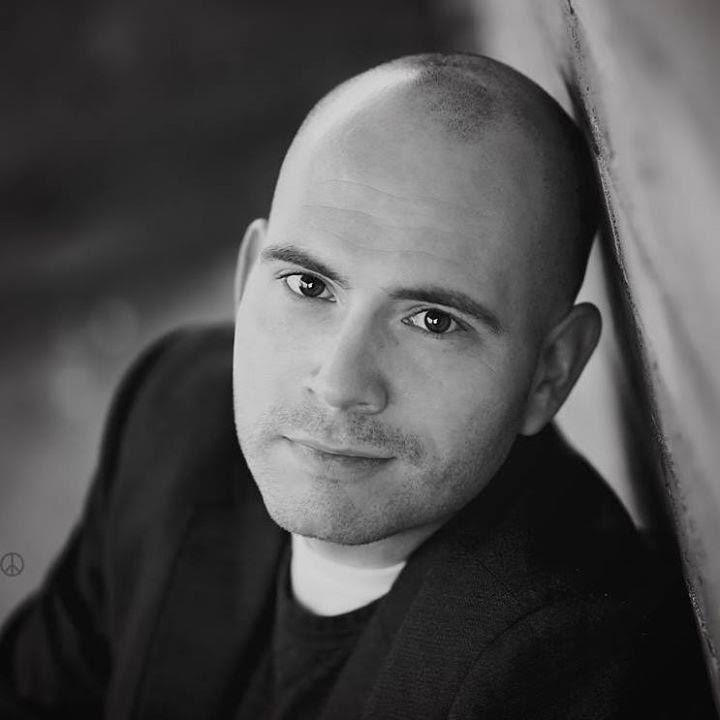
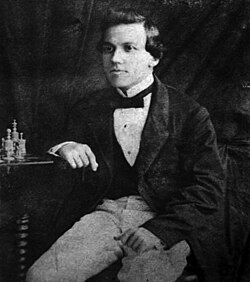
Paul Morphy
The pride and sorrow of chess. In a competitive career of barely two years, the New Orleans prodigy Paul Morphy swept aside every great player of the 1850s and became, by universal acclaim, the best in the world — the unofficial champion before official champions existed. Then, at the height of his powers, he simply walked away. He left behind a body of games so clear and so modern that they are still the first thing a beginner is shown.
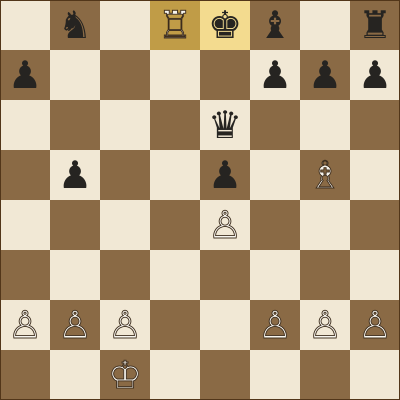
The Opera Game, Paris 1858 — the final position after 17.Rd8 checkmate (the mating rook and the trapped king highlighted). Morphy gave up his queen the move before; here every White piece that remains is working, while Black's are still on their starting squares. It is the most famous teaching game ever played.
Lived
1837–1884 · born New Orleans, Louisiana
Peak
1857–1859 — unofficial world champion, beat Anderssen in 1858
Signature Game
The Opera Game, Paris 1858 — a flawless attacking miniature
Style
Lightning development, open lines, ruthless use of the initiative
Two years at the top of the world
Morphy learned chess as a boy in New Orleans and was beating the strongest players in America while still a teenager. In 1857 he won the First American Chess Congress in a rout, then sailed for Europe, where he demolished the continent's best — most famously defeating Adolf Anderssen, the leading European master, in an 1858 match. By 1859 there was simply no one left who could give him a serious game. He was, by common consent, the best player alive.
Then he stopped. Morphy regarded chess as a gentleman's amusement, not a career, and returned home meaning to practise law. He never again played seriously. The brilliance had lasted barely two years — which is why he is so often called "the pride and sorrow of chess."
Morphy vs the Duke and the Count, Paris 1858
The most famous teaching game in chess was played for fun, in a box at the Paris Opera, while Morphy half-watched the performance. His opponents — the Duke of Brunswick and Count Isouard — played as a team. It did not help. In a Philidor Defence, Morphy brought out piece after piece, each with a threat, until his fully developed army overwhelmed a position where Black had barely moved.
6. Bc4 Nf6 7. Qb3 Qe7 8. Nc3 c6 9. Bg5 b5 10. Nxb5 cxb5
11. Bxb5+ Nbd7 12. O-O-O Rd8 13. Rxd7 Rxd7 14. Rd1 Qe6
15. Bxd7+ Nxd7 16. Qb8+!! Nxb8 17. Rd8#
17.Rd8# (highlighted). Morphy's 16.Qb8+!! sacrificed the queen to deflect Black's last defender; the rook then delivers mate, the king boxed in by its own undeveloped bishop on f8 and the bishop on g5 covering e7. Every surviving White piece does a job; Black's never entered the game.
The lesson is timeless: develop with purpose, open lines toward the enemy king, and let your activity — not your material — decide the game. Part 2 turns these instincts into the principles every player can learn.
Paul Morphy — FAQ
Was Paul Morphy a world champion?
There was no official title in his time — it began with Steinitz in 1886. But after Morphy crushed the strongest players in America and Europe in 1857–59, including Anderssen, he was universally regarded as the best in the world: the unofficial world champion.
What is the Opera Game?
Morphy's most famous game, played in 1858 in a box at the Paris Opera against the Duke of Brunswick and Count Isouard. In a Philidor Defence he developed every piece with threats and finished with a queen sacrifice and 17.Rd8 checkmate — a flawless miniature still used to teach development.
Why did Morphy stop playing chess?
After dominating the chess world by 1859, he retired from serious play in his early twenties, regarding chess as an amateur pursuit. He returned to New Orleans to practise law and never regained his enthusiasm — "the pride and sorrow of chess."
The Opera Game mate — 17.Rd8#, the most famous teaching finish in chess.
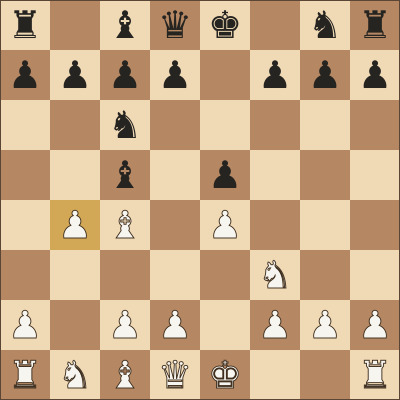
The Evans Gambit — the kind of open, attacking opening that suited Morphy's lightning development.
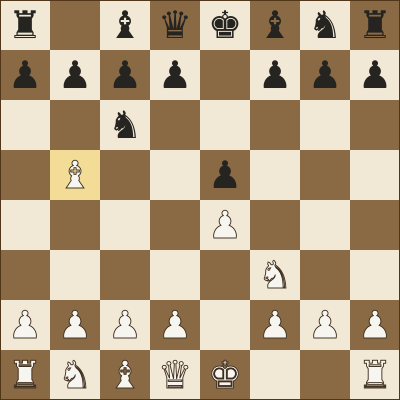
The open games — Morphy's home, where rapid development and open lines decide.
- Morphy–Duke of Brunswick & Count Isouard, Paris 1858 ("The Opera Game").
- Morphy–Anderssen match, 1858 (records).
- Lawson, D. Paul Morphy: The Pride and Sorrow of Chess.
- First American Chess Congress, 1857.
Paul Morphy — Part 1 of 2
The Opera Game is beautiful — but its real value is the method behind it. Part 2 distils Morphy's chess into the principles of development and open play that still underpin how the game is taught.