A Michael Paycer Project

The Decision Council

One question, twenty-two minds. A local app I built that routes any decision through a ring of historical thinkers, presidents, CEOs, and three sacred books — each a distinct reasoning lens — then has an oracle named Xiao read the room and deliver a single, spoken verdict.

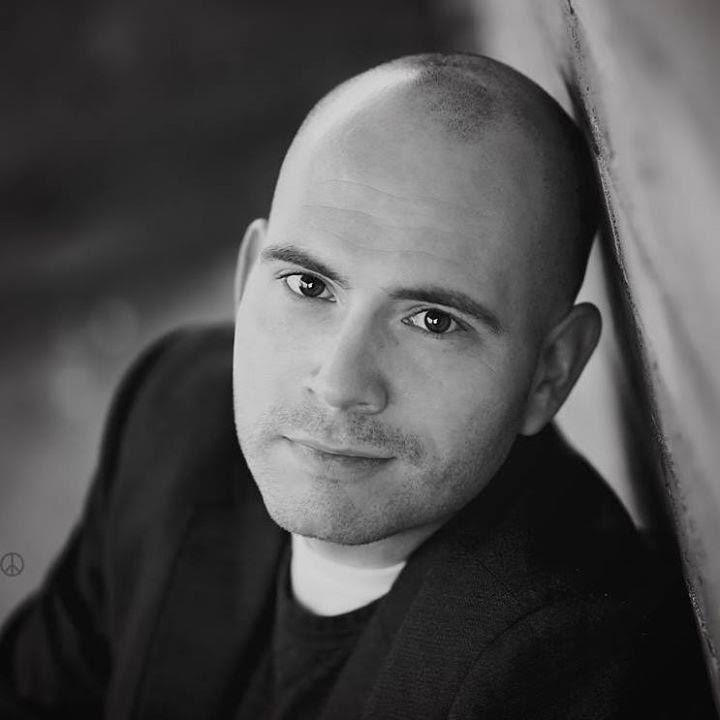
Michael Paycer, builder of the Decision Council Michael Paycer
The Decision Council app: a ring of advisor portraits around Xiao the oracle, with the Affected Person and Decision Clerk court roles, guest advisors, and the three Conscience and Conversion Seat books
The Decision Council in action The full ring around Xiao (小), the two court roles, the guest advisors, and the three books of the Conscience & Conversion Seat.Local app · built by Michael Paycer
Overview

Built for structured disagreement

Most advice tools collapse toward one confident answer. This one does the opposite — it forces a question through Stoic discipline, practical execution, moral burden, scientific proof, strategy, mindfulness, and contrarian interrogation at once, so the blind spot of any single lens gets caught by another.

The Ring

14 permanent advisors, always convened

Guests

8 optional specialists

The Books

3 sacred texts — a moral check

The Oracle

Xiao synthesizes one verdict

Stack

Python · Streamlit · Claude API

Voice

Wake word “Xiao” · ElevenLabs

The Members

The permanent ring — 14 advisors

These sit in a circle around Xiao and answer every question. Each is defined by the question it always asks.

The Stoic Governor

Marcus Aurelius

“What is within your control, and what kind of person will you be while handling it?”
The Practical Experimenter

Benjamin Franklin

“What practical experiment can improve this situation this week?”
The Burdened Moral Leader

Abraham Lincoln

“What is the right thing to do when every available path still has a cost?”
The Imaginative Systems Designer

Leonardo da Vinci

“What would this look like if we stopped accepting the normal categories?”
The Persistent Scientific Seeker

Marie Curie

“What do we actually know, what are we assuming, and what must be proven?”
The Strategic Calculator

Garry Kasparov

“What is the position, what are the forcing moves, and what will the board look like three moves from now?”
The Advisor of Flow and Non-Forcing

Lao Tzu

“Where are you forcing something that would work better through patience, simplicity, and alignment?”
The Terrain Strategist

Sun Tzu

“Where is the terrain favorable, and where are you fighting the wrong battle?”
The Mindful Peacemaker

Thich Nhat Hanh

“Can you see this clearly without being ruled by anger, fear, or craving?”
The Contrarian Interrogator

Socrates

“What are you assuming that you have not proven?”
The Compassionate Ethical Humanist

Dalai Lama

“Can you act with compassion without losing wisdom, boundaries, or strength?”
The Great Communicator

Ronald Reagan

“What is the simple, hopeful message that ordinary people can understand and repeat?”
The Modern Operator

Lisa Su

“What are the few priorities that matter enough to focus the whole system around them?”
The Evidence Reformer

Florence Nightingale

“What does the data show that the story is hiding?”
Convened On Demand

Guest advisors — 7 specialists

Called in from the sidebar when a question needs their narrow strength.

The Ruthless Tactical Purist

Bobby Fischer

“What is the strongest move if emotion, popularity, and comfort are ignored?”
The Moral Lawgiver

Immanuel Kant

“Could you honestly want everyone to act by the same rule you are using for yourself?”
The Plainspoken BS Detector

Mark Twain

“What is the plain truth here once we stop dressing it up?”
The Detective of Inference

Arthur Conan Doyle

“What facts are visible, what facts are missing, and which explanation best fits the evidence?”
The Institutional Transformer

Satya Nadella

“What mindset shift has to happen before the strategy can actually work?”
The Reality Tester

Richard Feynman

“What would prove this wrong?”
The Patient Field Observer

Jane Goodall

“What are they actually doing, not just what are they saying?”
The Conscience & Conversion Seat

Three books, consulted after the ring

A separate moral mirror that runs after the council speaks and before the verdict. It does not make the decision smaller; it makes it cleaner.

The Conscience Seat

Tao Te Ching

“Where am I forcing something that would work better if I stopped forcing it?”
The Conscience Seat

The Dhammapada

“Is my mind creating suffering through craving, anger, or delusion?”
The Conscience Seat

Confessions — St. Augustine

“What am I loving in the wrong order?”
Safeguards In The Room

Two court roles

The Witness

The Affected Person

An empty chair — not an advisor. It asks the one thing analysis forgets: who pays the price if this is wrong?

The Record

The Decision Clerk

Records the decision, the assumptions, and later what actually happened — so the council becomes a record of your judgment over time.

How I Use It

Far more than yes-or-no decisions

Learning and studying. Feynman forces me to explain a topic simply or admit I can't; Curie separates what I know from what I'm assuming; Socrates keeps asking the question under the question until the gaps show.

Ethics. Kant tests whether a rule survives being universalized; Lincoln weighs the human cost when every option hurts; the Conscience Seat checks whether I'm seeking the right answer or protecting the version of myself that doesn't want to change.

Philosophy and theory. Run a genuine question and watch the frameworks diverge — Stoic control, Taoist non-force, Socratic interrogation, Kantian duty. The disagreement is the point.

Friends, family, and everyday calls. Relationship questions route to Thich Nhat Hanh and the Dalai Lama; the Affected Person chair keeps asking who actually bears the cost of the choice.

Xiao's Verdict — a worked example

“Take the role only if you can name the specific thing it buys that your practice can't, and say it out loud without flinching. If you can't, the offer is a test of nerve, not a better life.”
Under The Hood

How each member was written

Every advisor is one authored block of text — the framework field in the code. I wrote them by hand to a single template so 22 very different figures produce output that is distinct in voice but comparable in shape: identity, the seat and lens they hold, the question they always ask, what they're best and worst for, their blind spot, how they disagree, and a fixed output format.

At runtime a prompt builder assembles the active advisors into one request and requires strict JSON — core issue, per-advisor verdicts, the disagreement, a recommendation, the hard question, and Xiao's spoken verdict. Adding or revising an advisor is just editing one well-shaped block of prose.

FAQ

Frequently asked questions

What is the Decision Council?

A local app that sends one question to 22 advisors, each a distinct decision framework modeled on a historical thinker, then has an AI oracle named Xiao synthesize the core issue, the disagreement, a recommendation, the hardest unasked question, and a final spoken verdict.

How is it different from the Council of Philosophers?

The Decision Council is broader and built to decide: it mixes philosophers with presidents, CEOs, the field observer Jane Goodall, and three sacred books. The Council of Philosophers is philosophers only and built to understand. Both share Xiao, voice, court roles, and the decision log.

How is it built?

It runs locally in Python and Streamlit against the Anthropic Claude API, with optional ElevenLabs voice and browser speech input. Each advisor is one authored framework block assembled into a single strict-JSON request.

Who built it?

Michael Paycer, a SQL Server DBA and developer in St. Cloud, Minnesota, built it as a personal project.

The companion council

Prefer pure philosophy?

The Council of Philosophers runs the same engine with twelve philosophers and nothing else — built to understand an idea rather than decide.

Enter the Council of Philosophers →
Related